REVIEW · HIKING & TREKKING
Salkantay Trek 4 Days to Machu Picchu by Glamping Sky Lodge Dome
Book on Viator →Operated by Quechuas Expeditions · Bookable on Viator
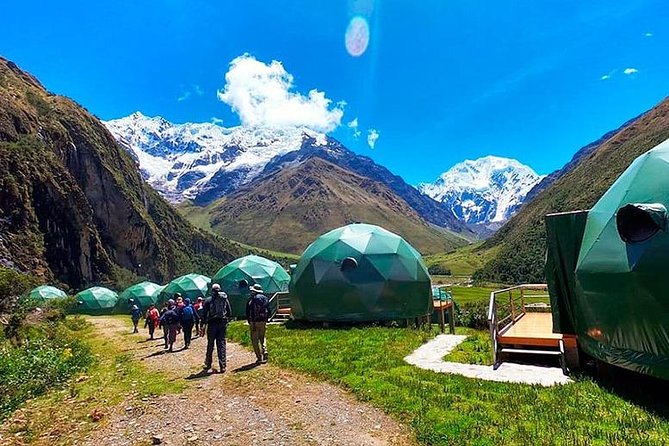
Snow peaks and dome beds. This trek hits hard. You get glamping dome accommodation while hiking deep into Salkantay country, then finish with a Machu Picchu sunrise option that helps you see the citadel in its most magical light.
I really like the level of support baked into the trip: guides (including praised leaders like Fernando) keep the pace realistic, share the story behind what you’re seeing, and help you stay safe at altitude. The main drawback is simple: this is an early-start, high-altitude trek with cold nights and a hard climb over the pass, so you’ll want solid fitness and warm layers.
In This Review
- Key things that make this trek work for real people
- Glamping dome comfort at high altitude (and why it matters)
- Day 1: The 4:30 a.m. start, Cruzpata views, and Soraypampa’s cold welcome
- Day 2: The 4650m Salkantay pass, cloud forest downhike, and Chaullay coffee-camp vibes
- Day 3: Upper jungle walking to La Playa—rivers, waterfalls, and fruit
- Day 4: 4 a.m. wake-up, Machu Picchu climb or bus, then a guided tour
- Price and logistics: what $761.91 buys you (and what you’ll still pay)
- What to bring (and how to not suffer for no reason)
- Who this trek is for (and who should think twice)
- Should you book this Salkantay trek to Machu Picchu?
- FAQ
- What time is pickup and when does the experience start?
- How do I get to the trailhead?
- What’s included for sleeping during the trek?
- Are meals included, and which meals aren’t?
- Do you offer vegetarian meals?
- How much of my gear can the horsemen carry?
- Do you include Machu Picchu entrance fees and how do you return to Cusco?
- Is the booking refundable?
Key things that make this trek work for real people
- Glamping dome nights so you’re not sleeping on the ground in a tent at altitude
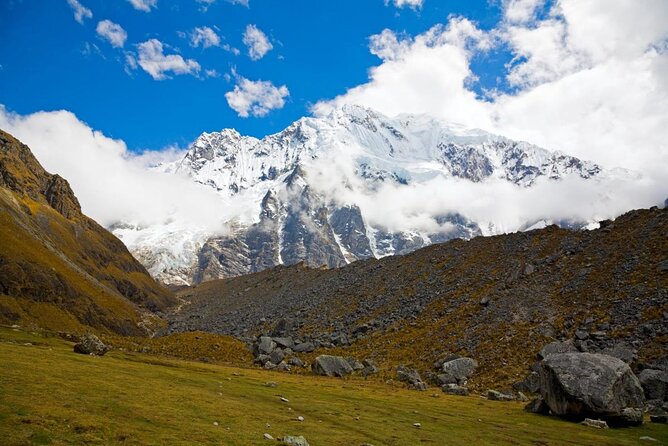
- Humantay + Salkantay mountain views on Day 1 during your lunch stop at Cruzpata
- The big Day 2 push to 4650m with a real chance of snow at the pass
- Cloud forest to jungle transitions you can feel in your lungs and legs
- Hot teas included in the rhythm to help you recover between hikes
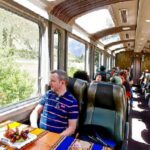
- Return by train + bus after Machu Picchu, so you don’t scramble for connections
Glamping dome comfort at high altitude (and why it matters)
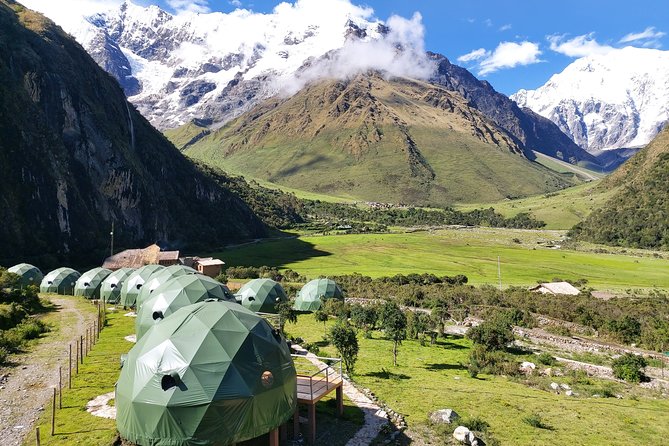
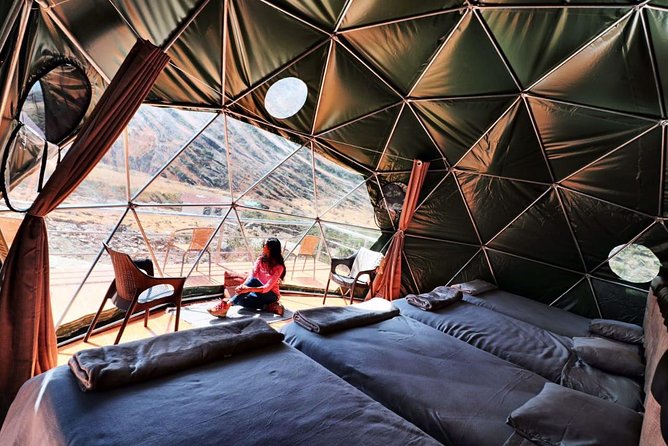
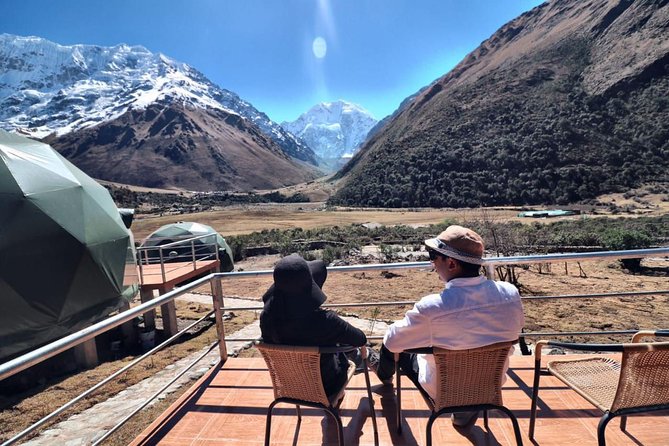
Salkantay is not a casual hike. Nights get cold, and at the highest and coldest campsite you’ll be thankful for a setup that’s warmer than a basic tent.
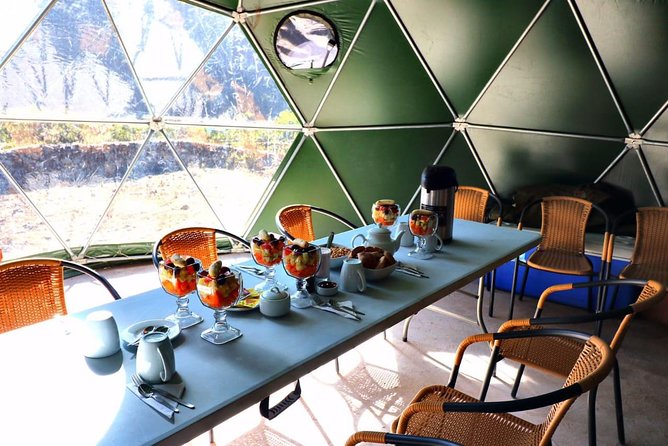
On this 4-day route, you’ll sleep in Sky Lodge Dome accommodation during the trek. In the real world, that means better shelter, less hassle, and a more restful night when your body still thinks Day 1 was “last week.”
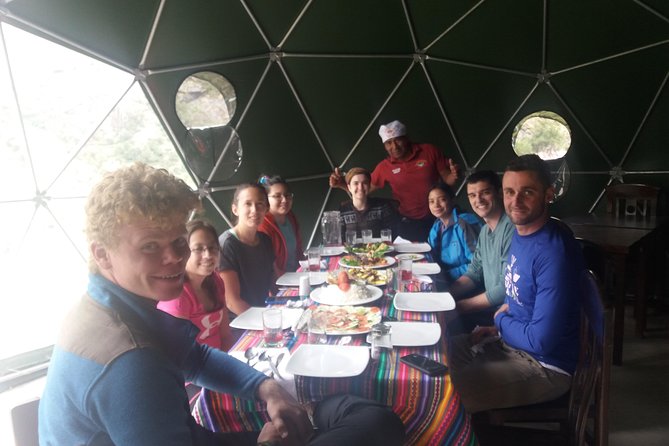
You also get practical creature comforts that keep things moving: the itinerary includes hot drinks at set times, and the program builds in a cooking team on the mountain. That combo matters more than it sounds when you’re exhausted and your fingers stop working well.
You can also read our reviews of more hiking tours in Cusco
Day 1: The 4:30 a.m. start, Cruzpata views, and Soraypampa’s cold welcome
Day 1 begins early. You’ll be picked up from your hotel around 4:30 a.m., then drive for about three hours to Mollepata, where you’ll start the trek after breakfast and as the cook and horseman prep everything.
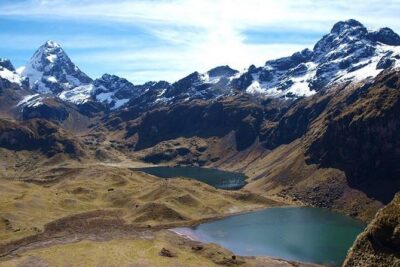
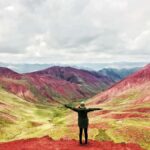
Once you’re on the trail, expect your first effort to be mostly uphill. After roughly three hours, you’ll reach Cruzpata for lunch with panoramic views of major peaks—especially Humantay (4120m/13500ft) and Salkantay (6271m/20575ft). It’s a good moment to take stock: you’re high, the air is thinner, and the scenery is already doing the heavy lifting.
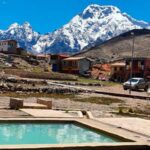
From there, you hike onward to Soraypampa, your first campsite (about 3800m/11750ft). This one is described as the highest and coldest campsite of the trip, and it’s not the kind of place where you want to be underprepared. Pack for chilly nights even if the morning feels manageable.
What you’ll love about Day 1 is the shape of it: a slow build, a clear reward at Cruzpata, then a campsite that sets you up for the big Day 2 climb.
Day 2: The 4650m Salkantay pass, cloud forest downhike, and Chaullay coffee-camp vibes
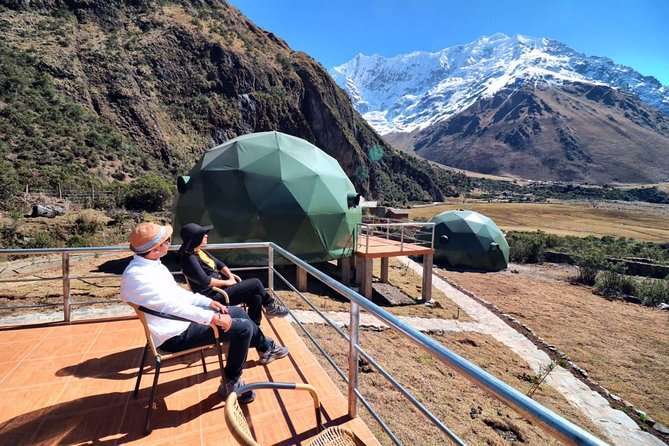
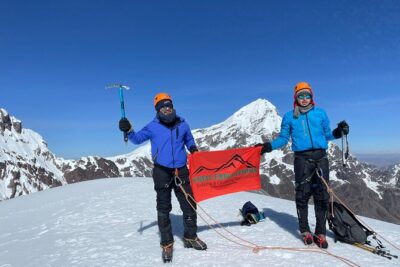
Day 2 is the longest and most demanding day. You start walking around 5:30 a.m., after breakfast, with about four hours uphill to the trek’s highest point at roughly 4650m/15200ft.
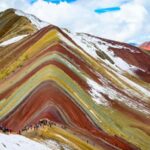
This is the pass area where you get a dramatic view corridor between two huge mountains—Salkantay to one side and Tucarhuay to the other. The route also notes a real possibility of snow here, which means it can be brutally cold even if the climb feels steady.
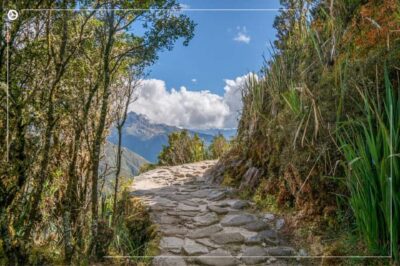
After you rest at the pass, the trail turns downhill. You’ll hike through a cloud forest, a shift that often feels like “the air gets heavier” compared to the morning. You’ll reach Huayracpunku for lunch, then continue toward the jungle area.
Later, you reach Chaullay and take local transportation for about an hour to your campsite at Loreta La Playa Coffee Campsite. That transport is important: it breaks up the day when your legs are done negotiating.
If you’re worried about whether you’ll handle it, this is where the guide support matters. Guides like Fernando (and other leaders with strong pacing reputations) are known for checking in and encouraging you—especially if altitude starts affecting your mood and breathing.
Day 3: Upper jungle walking to La Playa—rivers, waterfalls, and fruit
Day 3 shifts the mood. After breakfast (around 6:30 a.m.), you start walking through the upper jungle.
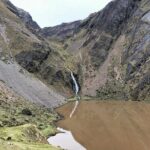
You cross the Lluskamayo River and smaller brooks along the way, so expect your footing to feel different than earlier days. The trail is described as taking about six hours, with plenty to see as valleys open up.
The sightseeing notes are specific: you can look for waterfalls, tropical fruits, and different plants as you work your way toward La Playa. This is the day where Salkantay stops feeling like a “big challenge” and starts feeling like a full-on nature journey.
For many people, the practical win on Day 3 is how it resets your expectations. The altitude challenge isn’t gone, but the environment changes, and that can make the hours feel more like a walk through different worlds than a continuous grind.
Day 4: 4 a.m. wake-up, Machu Picchu climb or bus, then a guided tour
Day 4 is the finish line—and it starts early again. You’ll wake around 4:00 a.m., have breakfast around 4:30 a.m., then leave for Machu Picchu.
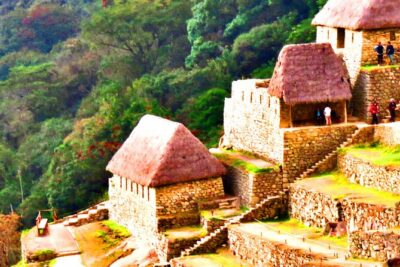
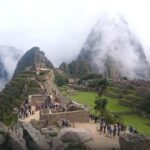
You have two options for getting up: either walk up for about 1.5 hours, or catch the first bus (around 5:30 a.m.) for a ride of roughly 25 minutes. The bus option exists so you can appreciate Machu Picchu as the sun rises.
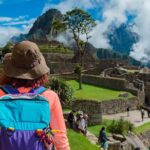
Once you arrive, there’s a walking tour of about two hours with your guide. That guided time is valuable because Machu Picchu can feel overwhelming if you’re trying to figure it out solo while your legs are still recovering from the trek.
After the tour, you explore on your own. This is your chance to slow down, find your favorite viewpoints, and do the photos without the pressure of keeping up with a constant commentary.
You’ll also have a hotel night in Aguas Calientes with a private shower and bathroom, which is a big deal after multiple days of minimalist living.
You can also read our reviews of more tours and experiences in Cusco
Price and logistics: what $761.91 buys you (and what you’ll still pay)
At $761.91 per person, you’re paying for a very logistics-heavy experience. This program includes pickup, transport to the trail area, a professional guide setup, a cook and cooking equipment, horsemen/porters to carry up to 7 kg of food and gear, dome accommodation, and meals across the trek.
It also includes key “big ticket” items for your ending: Machu Picchu entrance fee plus the return journey by train from Aguas Calientes to Ollantaytambo, followed by a bus back to Cusco.
Where costs can pop up: the tour notes that breakfast on Day 1 and lunch on Day 4 are not included. Also, there are additional entrance fees noted for Salkantay & Humantay (listed as 20 soles / PEN20 per person). For peace of mind, plan to bring cash for those.
In plain terms, the value here comes from how much is handled for you. If you tried to DIY it, you’d still have to arrange guides, food, camp support, and the Machu Picchu connection. You’re paying so you can focus on walking, adjusting to altitude, and enjoying the scenery.
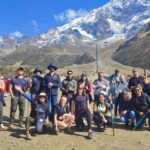
One more practical note: the group size is capped at 19 travelers, and there’s an assistant guide added when groups are larger than 8. That structure helps keep the trek feeling organized rather than chaotic.
What to bring (and how to not suffer for no reason)
You don’t need “special gear,” but you do need the essentials and good-quality versions of them. The packing list is very real about the cold and wet: plan for wind, rain, and sub-freezing nights.
You’ll be advised to bring:
- A sleeping bag rated to -11 C / 12 F
- A rain poncho or rain jacket
- Wind/rain pants (Gore-tex or similar)
- Trekking poles and a headlamp or torch
- UV protection (sunglasses) and sunblock
- Gloves, a wool or fleece hat, and warm layers
Footwear matters. The list assumes you’ll use trekking boots (with at least one pair ready for the trail), plus wool or synthetic socks.
Water is also part of the plan. Bottled water is for sale at several points, but you’ll get guidance at briefing. You’ll also be encouraged to carry a water bottle and have sterilizing tablets.
On the altitude front, this trip includes a first-aid kit and an emergency oxygen bottle. That doesn’t replace pacing and common sense, but it’s a comfort when you’re staring down the pass at 4650m.
Who this trek is for (and who should think twice)
This is best for you if you want:
- A guided route with real camp support (cook, horsemen, dome lodging)
- A challenging itinerary that still includes comfort at night
- A Machu Picchu finish with both sunrise options and a guided walkthrough
It may not fit if you struggle with very early mornings, cold nights, or high-altitude climbs. Day 2 includes the highest point and can bring snow, and the campsite at Soraypampa is explicitly described as the coldest.
If you’re traveling solo, the guided structure and capped group size can also make the experience feel safer and more manageable than going it alone. One of the strong takeaways from guide experiences on this route is how much they manage different fitness levels.
Should you book this Salkantay trek to Machu Picchu?
If you want Salkantay’s big scenery but you don’t want to sleep on the ground, I’d seriously consider booking this. The Sky Lodge Dome nights plus included meals, hot teas, and a trained guide team remove a lot of friction from a trek that would otherwise be stressful.
Book it if you:
- Have the fitness to handle a high pass (about 4650m) and long walking days
- Want sunrise options at Machu Picchu and a guided tour there
- Care about camp comfort enough to pay for the logistics
I’d think twice if you’re sensitive to cold, dislike very early starts, or don’t have time to adjust to altitude. The route is doable, but it’s still a real trek, not a casual stroll.
Bottom line: this is a strong value when you factor in the support staff, dome lodging, and the Machu Picchu entrance plus return train setup. Just budget the extra site fees and plan your layers like you’re going somewhere cold.
FAQ
What time is pickup and when does the experience start?
You’ll have a very early start. The pickup is listed at about 4:30 a.m. from your hotel, and the meeting point start time is also given as 5:00 a.m. for the overall experience.
How do I get to the trailhead?
The tour includes pickup from your hotel and a tourist bus from Cusco to Challacancha (trailhead).
What’s included for sleeping during the trek?
You get Sky Lodge Dome accommodation for the trek nights. The materials also specify you should bring a sleeping bag rated to -11 C / 12 F.
Are meals included, and which meals aren’t?
The trip includes 3 breakfasts, 3 lunches, and 3 dinners, plus 3 afternoon hot teas. Breakfast on Day 1 and lunch on Day 4 are listed as not included.
Do you offer vegetarian meals?
Yes. There is a vegetarian option with no extra cost.
How much of my gear can the horsemen carry?
Your guides provide horsemen/porters to carry food and camping equipment, plus personal belongings up to 7 kg. You’ll also get a duffel bag.
Do you include Machu Picchu entrance fees and how do you return to Cusco?
Machu Picchu entrance fee is included. After Machu Picchu, you’ll return by train from Aguas Calientes to Ollantaytambo, then bus back to Cusco.
Is the booking refundable?
No. This experience is non-refundable and cannot be changed for any reason. If you cancel, your payment will not be refunded.