REVIEW · HIKING & TREKKING
4-Day Salkantay Trek to Machu Picchu
Book on Viator →Operated by Bamba Travel · Bookable on Viator
Salkantay hits hard, then rewards you fast. This 4-day route balances big mountain days with a civilized payoff at Machu Picchu, and it’s run with a small group and a bilingual guide who keeps you moving with confidence. I especially love the way the team handles the tough parts—like packing support and camp logistics—without removing the adventure. One thing to consider: it’s demanding, with major altitude swings and cold nights, so you’ll want real fitness before you sign up.
The best part for me is the human side. You’ll be trekking with a local guide, and the names that show up repeatedly in great feedback are people like Percy, Francisco, Junior, Cesar, and Chino—folks who can explain what you’re seeing and pace the group without rushing. Second, I like that meals and basic sleeping gear are built in, including a vegetarian option if you plan ahead. A possible drawback: the itinerary is early and tight; on summit days and Machu Picchu morning, you’ll be up before your brain fully boots.
In This Review
- Key points before you go
- The vibe: a serious trek with real guidance
- Day 1: Humantay Lake and the coldest camp night
- Day 2: The 4,650m Salkantay pass and the option to save your legs
- Day 3: Upper jungle valleys, waterfalls, and the Aguas Calientes reset
- Day 4: First-bus Machu Picchu, guided orientation, and optional Huayna Picchu
- Price and value: what $810 includes, and what you still need to budget
- What the trek gives you (camp, meals, and emergency gear)
- Packing and training: altitude swings are the real boss
- Who should book this Salkantay route (and who should skip it)
- Should you book this 4-Day Salkantay Trek to Machu Picchu?
- FAQ
- What time does the tour start in Cusco?
- How long is the trek?
- How big is the group?
- Where do I sleep during the trek and on the way to Machu Picchu?
- Are meals included, and is there a vegetarian option?
- How difficult is the trek and what altitude changes should I expect?
- What permits or entrance fees are not included?
- Is Huayna Picchu part of the Machu Picchu day?
- What’s the cancellation policy?
Key points before you go
- Small-group pace control: Max 16 travelers, and the average is much smaller.
- Camping support you’ll feel: A chef, horsemen, and mules carry cooking/camping gear (plus limited personal weight).
- Altitude reality check: You’ll go from high passes down toward warmer jungle elevations.
- Machu Picchu early start: You’ll take the first bus and get a guided orientation before exploring.
- Optional add-ons cost extra: Huayna Picchu, mountain hikes, horses, and a hydroelectric train transfer aren’t included.
The vibe: a serious trek with real guidance
This trek is built for people who want the Salkantay experience, not a long van ride with a few photo stops. You start with a 05:30 pick-up from Cusco-area lodging, and you’re moving quickly—first uphill, then to the highest pass, then toward the warmer jungle zones.
What makes it work is the structure. You get a professional bilingual guide for the trek and Machu Picchu visit, plus a local team around you (chef and horse staff). Reviews also repeatedly highlight guide personalities and practical help—people like Percy and Francisco are praised for answering detailed questions about plants and Machu Picchu’s geology, while Junior and Chino are called out for keeping the group motivated and explaining Inca culture in clear English.
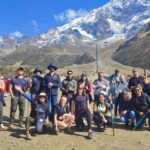
Group size matters here. With max 16 and avg around 4, you’re less likely to feel like a number. That also makes pacing easier when the trail gets steep.
You can also read our reviews of more hiking tours in Cusco
Day 1: Humantay Lake and the coldest camp night
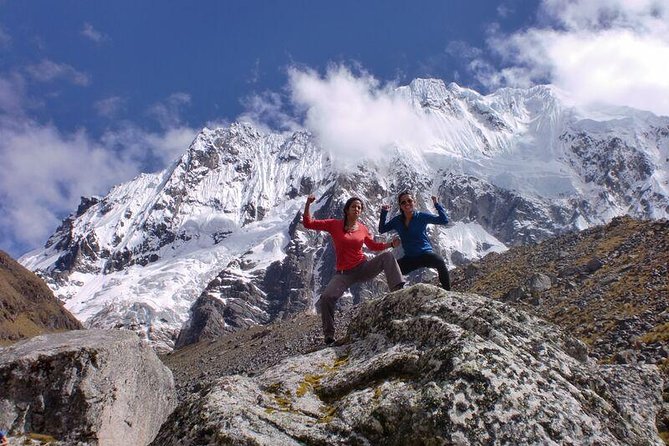
Your day begins early, with pick-up around 05:30 and travel to Mollepata at about 2,900m. You’ll get a stretch stop there to buy snacks and handle anything you forgot (because you will, at altitude). Then you continue by car to Challacancha for final equipment checks.
After that, it’s a 3-hour hike to Soraypampa at roughly 3,920m, where lunch comes with wide-open Andean views. This matters because it breaks the day into chunks: you start moving, refuel with a good meal, then go for the lake hike.
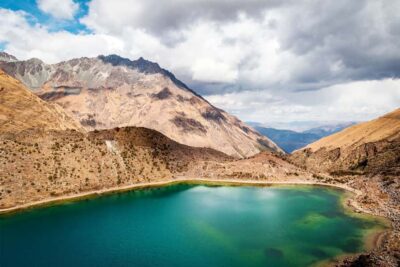
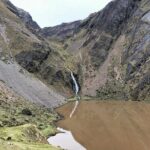
The Humantay Lake part is the classic moment: about 1.5 hours each way to Laguna de Humantay. The scenery is the point, but the practical win is that you get acclimated gradually. By the time you reach the lake, your body has already learned how to work at higher altitude.
Then comes the trade-off. Your first campsite is at 3,920m, described as the highest and coldest of the trip. You’ll want to treat your first night like a mission: eat dinner, get warm, and rest. The tour provides a basic sleeping pad and tent setup, but you still need to handle mountain cold with smart layers.
Meals on this day are lunch and dinner (and you’ll have 1 night of camping here).
Day 2: The 4,650m Salkantay pass and the option to save your legs
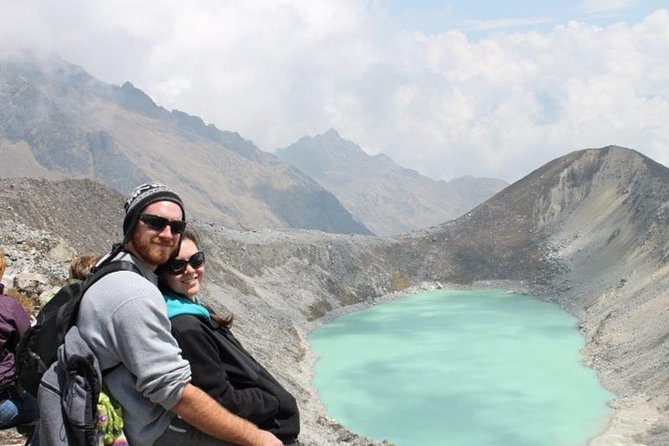
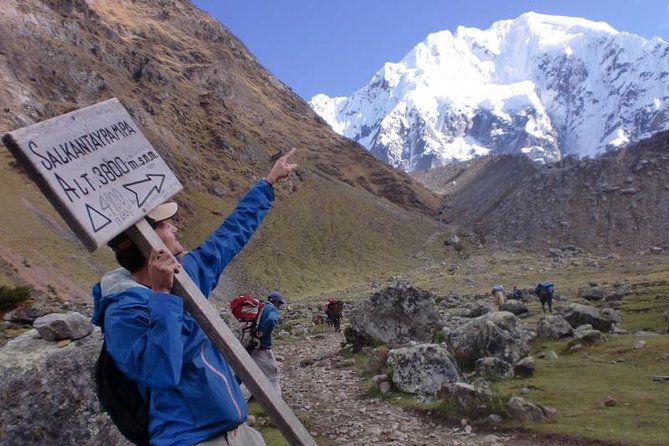
Breakfast is around 6:00, then you start your big climb. The hike is about 4 hours to the highest pass at 4,650m, located between Salkantay and Humantay. The trail here is the altitude test: even when the walking is steady, your breathing will feel like it’s writing its own rules.
From the pass, you get incredible views of both snow-capped mountains, and the conditions can include snow. That’s why pacing is everything. Some people choose a horse rental option to reach the high pass for 100–120 soles. It’s optional, but it can be a lifesaver if you’re strong on endurance yet worried about steep high-altitude fatigue.
After the pass, the next phase is designed like a breather: a roughly 2-hour downhill hike. Then you stop for lunch at Huayracpampa, where you’ll likely feel the relief of being off the hardest elevation push.
The day finishes with another 3-hour trek to camp around 2,900m at Challhuay or Colcapampa, nearing the start of the high jungle region. This elevation drop is not just scenic—it’s how your body recovers before Day 3’s warmer, wetter-feeling trails.
If you’re the type who worries that “downhill means easy,” don’t. Downhill can still beat up your knees, especially after a high pass. A guide who can adjust pacing really matters, and the feedback you’ll see repeatedly points to guides doing exactly that—Junior and Francisco are both mentioned for steady, manageable pace and encouragement.
Day 3: Upper jungle valleys, waterfalls, and the Aguas Calientes reset
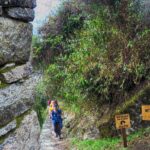
This is the day that changes the air. Breakfast is around 6:30, and you trek through the upper jungle, crossing the Santa Teresa River and moving along smaller brooks. The trail shifts from stark high-mountain views to a greener mix of valleys, waterfalls, and plant life.
Lunch comes at La Playa (2,200m), a midpoint where the temperature often feels more tolerable than the top days. After that, you travel by car to Santa Teresa town (1,700m), where the climate is noticeably warmer.
Then you roll again by car to the Hydroelectric Station (about 40 minutes), followed by a 3-hour walk to Aguas Calientes. This walking segment is often overlooked in planning—factor it in as part of the day’s rhythm, even though you’re headed for town comforts.
And then—finally—base-camp comfort. You spend the night in a 3-star hotel in Aguas Calientes. Once you’re there, you’ll find places to relax, including internet cafes and casual spots. There’s also an optional train transfer from the hydroelectric station to Aguas Calientes for an extra $30, which can help if your legs are done by the time you reach Hydroelectric.
What I like about this day is the pacing logic. You’re not just trekking through a biome change; you’re also getting a warmer night and a proper hotel bed before Machu Picchu.
Day 4: First-bus Machu Picchu, guided orientation, and optional Huayna Picchu
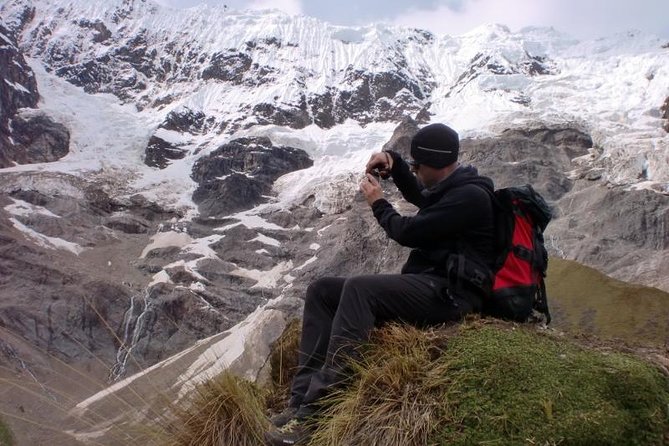
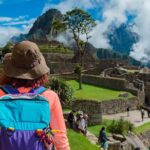
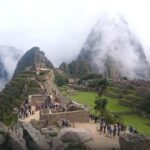
Day 4 starts with early buses. You catch one of the first buses at 05:30am to Machu Picchu so you can see the site in the morning light as mist dissipates. That timing is key because it changes the experience—more clarity, less haze, and a calmer start before bigger crowds build.
You’ll get a walking tour of about 2 hours with your guide. This is where having a strong guide pays off. In feedback, guides like Percy and Francisco are praised for giving detailed answers—everything from geography to Inca context—so the site feels less like a list of structures and more like a functioning world.
After the guided portion, you explore on your own. If you still have energy, you can add Huayna Picchu, but it’s not included. You have to request it in advance, and the allowed daily capacity is 400 people per day.
Then you head back to Aguas Calientes either by bus (every 15 minutes from the entrance) or by walking the trail down (about 1 hour). From there it’s train to Ollantaytambo, then bus back to Cusco—dropped off late at Plaza San Francisco. From that point, you handle your own ride to your lodging.
Day 4 is a finish line day. Don’t plan anything stressful right after you get back to Cusco. You’ve earned a slow evening and a proper meal.
You can also read our reviews of more tours and experiences in Cusco
Price and value: what $810 includes, and what you still need to budget
At $810 per person, the headline price looks straightforward, but it’s worth understanding what you’re paying for. You’re getting transport from Cusco into trek country, camping accommodation with basic sleeping pad and tent, a 3-star hotel night in Aguas Calientes, and guided trekking plus Machu Picchu tour.
You’re also getting substantial operational support: horsemen and mules carry cooking and camping equipment and also carry a limited amount of personal items (including sleeping bag and mattress weight limits). That support is one of the biggest value drivers on Salkantay, because it reduces how much you have to carry over long days.
Where the “real total” can climb is on permits and optional upgrades. The tour notes these are not included:
- Salkantay Trail trekking permit: PEN 133
- Machu Picchu entrance: PEN 48
- Huayna Picchu entrance (optional mountain hike also listed at PEN 200): optional ticket cost
- Hydroelectric station to Aguas Calientes train transfer: $30 (optional)
- Optional sleeping bag rental: $15
Tipping is also not mandatory, but it’s customary. The provided guideline is 40–60 soles per trekker for the guide, 30–40 soles per trekker for an assistant guide, and additional totals for horsemen and the cook for the whole group. If you want the experience to feel smooth and respectful, plan a budget for this.
So is $810 good value? For a 4-day guided trek to Machu Picchu with camping, a hotel night, and multiple covered transport legs, it’s a fair deal—especially because group sizes are small and the inclusion list is practical, not vague.
What the trek gives you (camp, meals, and emergency gear)
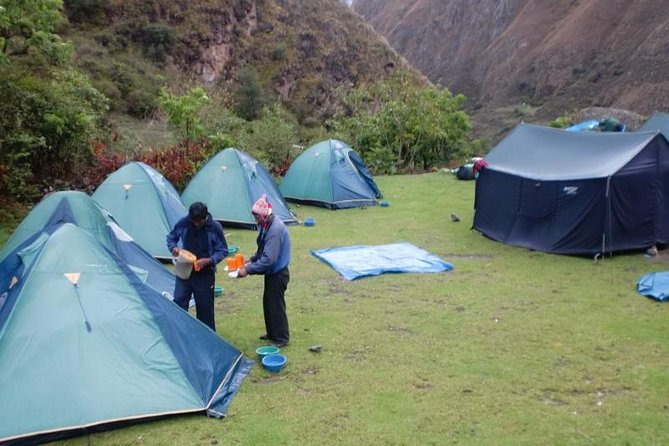
The camping setup is basic but functional: tents are included, and for single travelers you’ll share a tent/room with another traveler; couples get a tent/room to themselves. Foam sleeping mats are provided. You also get a first aid kit and an emergency oxygen bottle, which is a comfort at high altitude.
Meals are planned by the day: you’ll have breakfasts, lunches, and dinners across the trip except for Day 1 breakfast and Day 4 lunch/dinner. The menu is described as typical menus, with 3B/3L/3D/2 snacks total across the trip. If you’re vegetarian, the tour says a vegetarian option is available if you advise during booking.
One practical note: bottled water isn’t included. So you’ll want a plan for hydration, especially on the cold, dry high pass day and again on the warmer trekking-down days.
Packing and training: altitude swings are the real boss
This trek is demanding. The tour explicitly warns about major temperature changes associated with altitude swings—from around 4,000 meters down toward 2,000 meters. That means you’ll dress in layers for shifting conditions, not one “perfect” outfit.
Also plan for a cold first night. Day 1 camps at 3,920m, and it’s described as the coldest campsite of the trip. Even if you’re warm during the walk, nighttime can bite.
Training-wise, focus on two things:
- Cardio stamina for long uphill stretches and the 4,650m pass day
- Leg durability for downhill sections and repeated effort
The trek also has minimum age 7 years, but difficulty still makes it a serious undertaking for kids. If you’re bringing someone younger, consider their comfort with altitude and long hiking hours.
Gear-wise, you can rent an optional sleeping bag for $15. If you already own one, bring it. If not, decide based on comfort and how cold you run at night.
Who should book this Salkantay route (and who should skip it)
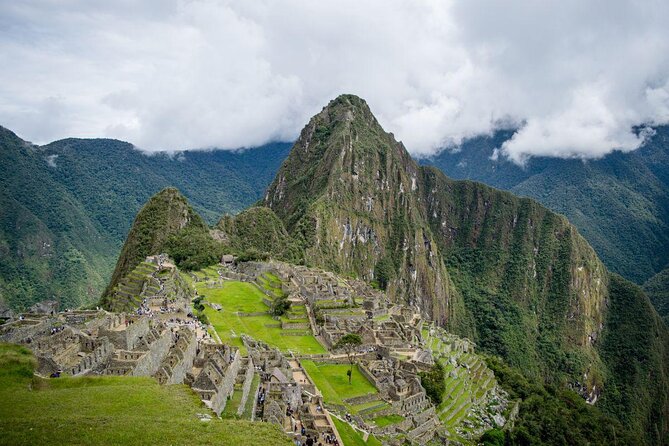
This trek is a great fit if you want a classic Salkantay-to-Machu Picchu arc with real guide support and a manageable group size. It’s also good if you value explanation, not just sightseeing. Feedback repeatedly praises guides who answer questions well and share context, from geography and plants to Inca culture and history.
It’s less ideal if you’re looking for an easy vacation. This is physically tough, and the early starts are non-negotiable. If altitude issues already scare you, or if you struggle with long days on your feet, this might be too much.
Also think about your tolerance for basics. You’ll get a hotel night in Aguas Calientes, but the trek portion is camping with simple sleeping gear. If you need luxury, you won’t find it here—and you should choose a different kind of Peru trip.
Should you book this 4-Day Salkantay Trek to Machu Picchu?
If you’re physically ready for a demanding trek and you want Machu Picchu with a guided start and the best chance for a clear morning, this is a strong option. The value comes from the mix of guided structure, small-group size, camp setup, and the practical operational team that keeps the logistics moving.
I’d book it if: you can handle early mornings, you’re comfortable with cold nights at altitude, and you want more than a quick checkmark visit to Machu Picchu.
I’d think twice if: you dislike altitude swings, you can’t commit to long hiking days, or you want a carefree pace. In that case, you’ll spend more time managing discomfort than enjoying the views.
FAQ
What time does the tour start in Cusco?
The start time is listed as 5:30am, with pick-up from your Cusco accommodation.
How long is the trek?
It’s a 4-day trip (approx.).
How big is the group?
The tour is small-group. Maximum is 16 travelers, with an average group size of about 4.
Where do I sleep during the trek and on the way to Machu Picchu?
You’ll camp for 1 night on Day 1 and 1 night on Day 2, and then you’ll stay in a 3-star hotel in Aguas Calientes for 1 night.
Are meals included, and is there a vegetarian option?
Meals are included for most days: Day 1 includes lunch and dinner, and Day 4 includes breakfast. A vegetarian meal option is available if you request it when booking.
How difficult is the trek and what altitude changes should I expect?
The trek is described as demanding. It includes hiking to a high pass at about 4,650m, and the route later drops toward around 2,900m and down closer to 1,700m, with major temperature changes along the way.
What permits or entrance fees are not included?
The Salkantay Trail permit (PEN 133) and Machu Picchu entrance fee (PEN 48) are not included. Optional Huayna Picchu and mountain hike tickets are also not included (PEN 200 each if you choose them).
Is Huayna Picchu part of the Machu Picchu day?
No, Huayna Picchu is optional and requires booking in advance. The allowed daily number is 400 people. The ticket costs extra (PEN 200).
What’s the cancellation policy?
This experience is non-refundable and cannot be changed for any reason.