REVIEW · MACHU PICCHU TOURS
Small Group 5 Days Salkantay and Machu Picchu by Llactapata Tour
Book on Viator →Operated by Xtreme Tourbulencia · Bookable on Viator
From the moment you start, this trek feels like a real adventure route to Machu Picchu, not a bus-and-bite tour. You hike part of the famous Salkantay route, camp at high Andean stops, pass through jungle-adjacent zones, and finish with a guided visit to Machu Picchu after reaching it via Llactapata.
What I like most is the small group size (max 9), which makes the pace and questions feel personal, even when the altitude is doing its thing. I also love the mix of scenery plus culture: you get high views around Humantay and Salkantay, then coffee/cacao learning at Lucmabamba, and finally that Llactapata-to-Machu Picchu storyline.
One drawback to plan for: the first two days are high intensity with a serious climb to the Salkantay Pass, and the focus on moving fast can feel uneven if your fitness isn’t super steady. Add basic camp conditions (and the day-3 toilet setup not being ideal for everyone), and you’ll want the right mindset.
In This Review
- Key highlights you should know before you book
- What You’re Really Buying: Salkantay plus Llactapata, not just Machu Picchu
- Starting in Cusco: 4:00 am and why it matters
- Day 1: Cusco to Challacancha, then Soraypampa and Humantay Lake (optional)
- Day 2: The climb to Salkantay Pass (4600m) and the shift to Collpapampa
- Day 3: Forest orchids, coffee/cacao plantations, then Lucmabamba lodge
- Day 4: Inca trail hike to Llactapata, then the descent toward Machu Picchu town
- Day 5: Machu Picchu first light at 6:00 am and the guided citadel tour
- Guides, pacing, and the human factor that makes this trek work
- Food and comfort: camping meals, a hotel night, and what to bring
- Price and What It Covers (plus what costs extra)
- Who Should Book This Salkantay Trek via Llactapata
- Should You Book This Small-Group Salkantay + Machu Picchu?
- FAQ
- How many people are in the group?
- Where do we meet in Cusco and what time does the trek start?
- Is there a hotel stay included in Aguas Calientes?
- Are Machu Picchu entrance tickets included?
- Is transportation to Machu Picchu included?
- Do I need a sleeping bag?
- How much personal equipment can go on the horse/mules?
- Are meals included throughout the trek?
- Is train travel included after Machu Picchu?
Key highlights you should know before you book
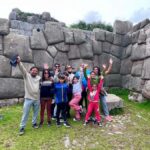
- Max 9 travelers keeps the trek feeling human-sized, not herd-like
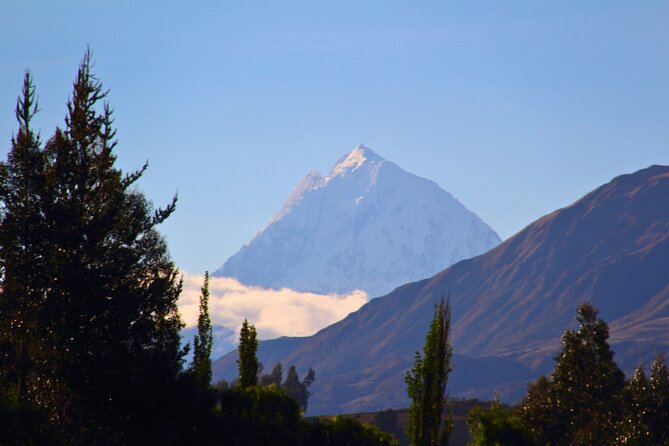
- Salkantay Pass (4600m) plus views of Salkantay (6264m) give you the Andes at full volume
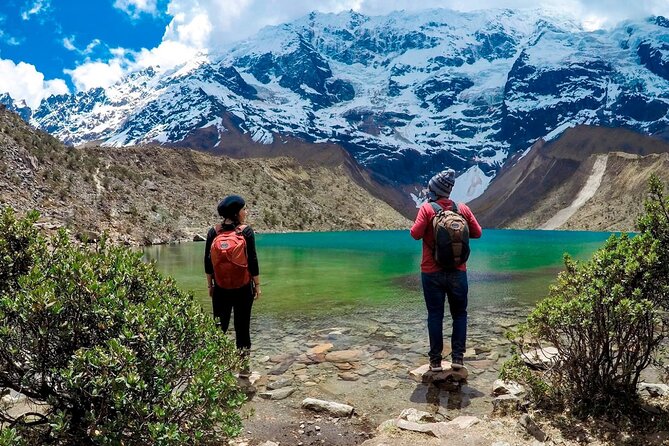
- Humantay Lake option from Soraypampa helps with acclimatization and gives you that turquoise payoff
- Lucmabamba coffee visit lets you see how coffee cherries become roasted coffee
- Llactapata hike delivers big Machu Picchu mountain + Vilcanota Canyon panoramas before the main site
- Horse/mule support up to 7kg helps you keep your load realistic for long climbs
What You’re Really Buying: Salkantay plus Llactapata, not just Machu Picchu
This is a 5-day route that earns Machu Picchu rather than simply dropping you off. You’ll spend multiple nights on the trek (camping at Soraypampa and Collpapampa, then in Lucmabamba), with a hotel stay in Aguas Calientes before your guided Machu Picchu visit.
The value here isn’t only the sites. It’s the sequence: altitude start from Cusco, then Humantay/Salkantay region trekking, then lower-elevation farming and rural life, then an Inca-trail-style approach to Machu Picchu via Llactapata. If you want the story of the journey—how the Andean world changes as you descend and climb—this fits.
You can also read our reviews of more tours and experiences in Cusco
Starting in Cusco: 4:00 am and why it matters
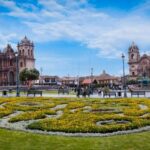
Your day-to-day begins early. The tour starts back at the Plaza de Armas de Cusco (meeting point listed at Del Medio 123), with a 4:00 am start time. That isn’t just for scheduling; it helps you move before the day heats up and gives you time to get into the trekking rhythm while still feeling fresh.
You’ll also have a pre-briefing session at 19:00 in the office 1 or 2 days before your activity. That’s useful for two reasons: you’ll understand what to expect on the trek, and you’ll be able to ask the practical questions that can otherwise get awkward later—especially around equipment, timing, and meal expectations.
Day 1: Cusco to Challacancha, then Soraypampa and Humantay Lake (optional)
Day 1 starts with a private ride from Cusco toward Mollepata/Challacancha (the first trekking gateway). You’ll travel through Mollepata at about 3000m and continue on to Challacancha at 3400m, then meet the horsemen and trekking group once you arrive.
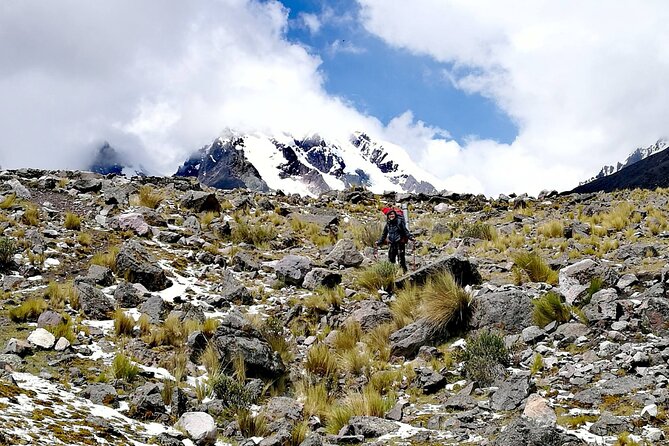
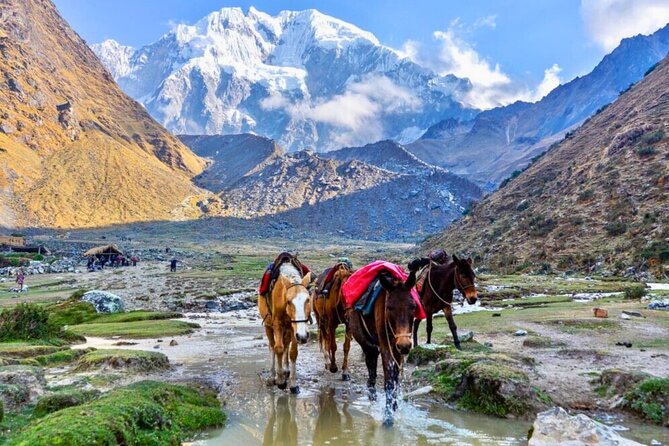
You’ll then hike through a valley with dramatic peaks in view—Humantay (5217m) and Salkantay (6264m) are your early “this is real” moments. It’s a strong first day because it’s challenging enough to wake up your legs, but it still feels like you’re being shown the stage.
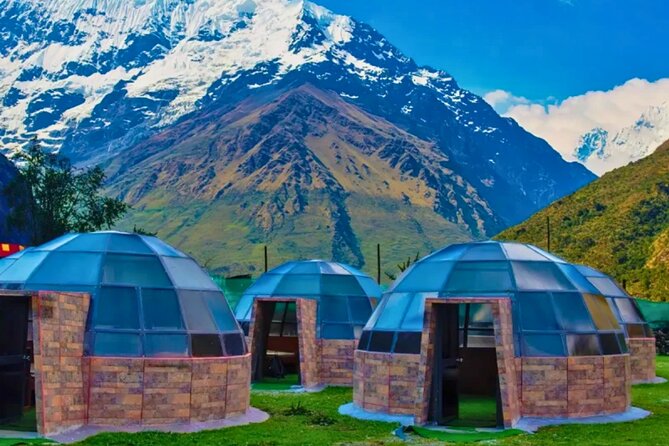
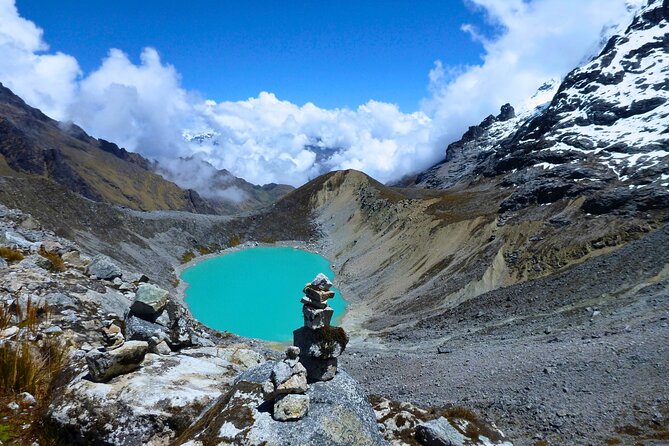
That night you camp at Soraypampa (around 3700m). In the afternoon, there’s an optional hike to Humantay Lake, described as a turquoise high-mountain stop. Even if you don’t go full-speed, this option can be great for acclimatization: it’s there if you’re feeling good, and it breaks up the day in a way that makes camp feel earned rather than endured.
Day 2: The climb to Salkantay Pass (4600m) and the shift to Collpapampa
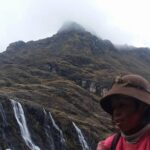
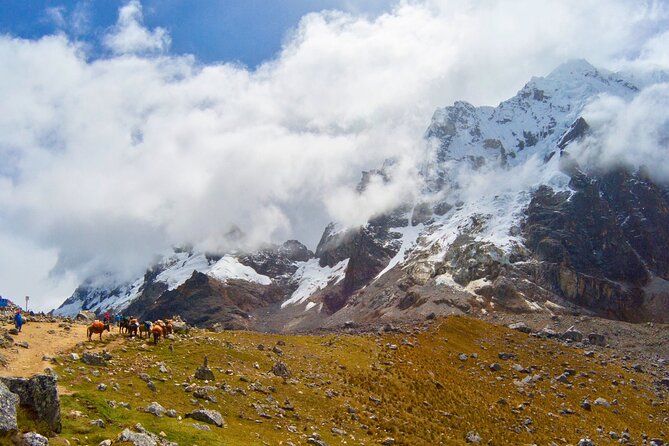
Day 2 is where the trek flexes. After breakfast, you ascend toward Salkantay Pass at 4600m. This is a big high point in the route, and the views are the point: you’ll be taking in Salkantay (6264m) from a pass viewpoint, then you start descending.
What’s clever about this design is the environmental shift. After the pass, the route transitions downward into a more lush ecosystem. By the time you reach Collpapampa (about 3000m) you’re in a warmer, more humid area—good for your body to cool down and loosen up after altitude stress, but you should expect mosquitoes.
You’ll camp at Collpapampa. The important thing is mental pacing: this day is not only about legs, it’s about learning how to keep moving efficiently while your body adapts.
Day 3: Forest orchids, coffee/cacao plantations, then Lucmabamba lodge
Day 3 starts with a descending trek through dense forest, where you’ll pass colorful orchids and bromeliads (and other plants suited to the humid mountain zone). This is the day when the trek stops being only about peaks and starts being about what people grow and how they live with the terrain.
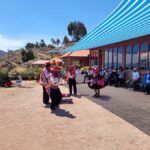
You’ll then continue into areas with coffee, cacao, and fruit plantations. The tour includes time to learn about cultivation and harvesting processes—useful context if you’ve only ever seen coffee as a café purchase. Here, you start to understand it as farm work tied to local rhythms and knowledge.
By afternoon, you move toward Wiñaypoco, Granadilla, and then Lucmabamba (around 2000–2650m range along the way), where you set up camp. A key highlight: at Lucmabamba Lodge, you’ll interact with a local rural family and see coffee cultivation from planting to harvesting, then drying and roasting, and finally how a cup of coffee gets made from all that labor. If you like food travel that has a real human source, this is the portion that will stick with you.
Quick realism check: one review noted that toilet situations on day 3 could be improved. So keep expectations basic and focus on the bigger picture.
Day 4: Inca trail hike to Llactapata, then the descent toward Machu Picchu town
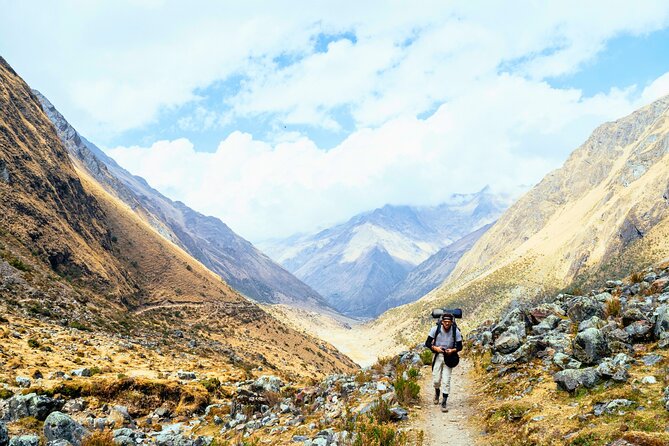
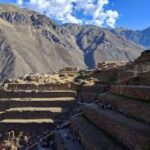
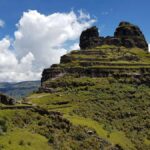
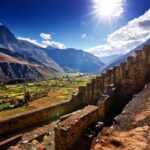
Breakfast in Lucmabamba starts your next climb/hike: you’ll head up the historic Inca trail toward Llactapata (around 2650m). Llactapata isn’t the main citadel, but that’s part of why it’s special. You’re walking ancient trail thinking about how Inca routes connected viewpoints, terraces, and travel corridors.
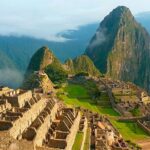
When you arrive at Llactapata, you’re rewarded with panoramic views of Machu Picchu Mountain and the Vilcanota Canyon. It’s a strong “wait, that’s really it up there” moment—especially if Machu Picchu has been on your bucket list for a while.
From Llactapata, you descend toward the Hydroelectric station area (about 1950m). Then you continue trekking to Machu Picchu town, also known as Aguas Calientes, where you stay overnight in a hotel with a private room and private bathroom. Breakfast is included with that hotel stay.
This night is also your decompression moment. After hours of trail, you’re suddenly in a town base where you can shower, eat with more normal choices, and prepare for the Machu Picchu visit.
Day 5: Machu Picchu first light at 6:00 am and the guided citadel tour
Day 5 begins with a very early departure from your hotel in Aguas Calientes—at 5:30 am after breakfast. You’ll take a tourist bus up and arrive around 6:00 am, just in time for first-light views. This is the version of Machu Picchu that feels most cinematic because the site wakes up with the light.
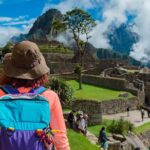
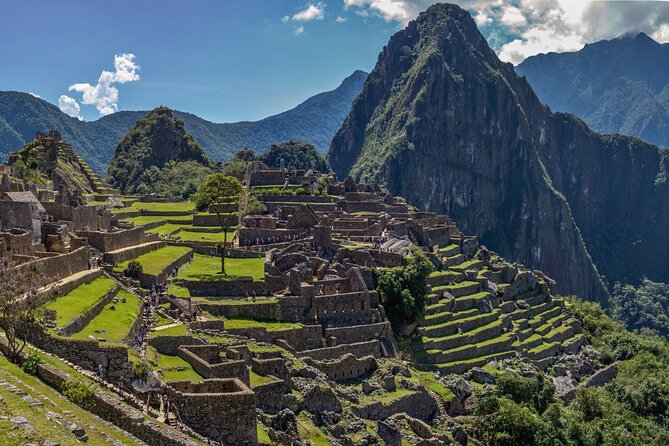
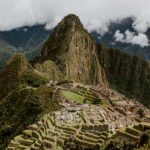
Your Machu Picchu time includes a guided visit at the Santuario Historico de Machu Picchu UNESCO site. The guide walks you through Inca civilization history and architectural features, with explanations focused on what you’re seeing as you move through the site. You’ll spend about 3 hours here.
Afterward, you return to Aguas Calientes for lunch, then continue by train from Machu Picchu to Ollantaytambo. From there, transportation is waiting to take you comfortably back toward Cusco (the tour notes a vehicle to Cusco Historic Center). The bus from Machu Picchu to Aguas Calientes is specifically listed as extra ($12), so plan for that small additional cost if it’s needed on your timing.
Guides, pacing, and the human factor that makes this trek work
This tour’s best ingredient is the people running it. It’s professionally guided, bilingual, and designed for small-group management—important because altitude and pace vary person to person.
Several guide names show up with strong praise: Jainor (especially for Inca culture/history explanations), Carlos, Henry, Dario, and Rolando/Ronaldo. If the operator allows it, requesting one of these guides is a smart move for getting the most out of the story side of the trek—not just the walking.
You’ll also benefit from the support team. Horsemen and mules handle personal equipment up to 7kg, with an emergency horse available (Marcoccasa – Chaullay noted). That matters because a lighter personal load usually means you can hike more comfortably instead of fighting your pack the whole way.
One more detail worth knowing: there’s tea and snack time every day. Small thing, big morale boost when your body is negotiating with thin air.
Food and comfort: camping meals, a hotel night, and what to bring
Meals are handled in a very practical way: you’ll get 3 breakfasts, 3 lunches, and 3 dinners included, with vegetarian meal options available. There’s also tea and snack time daily, which is a classic trekking lifesaver.
Camp comfort is where you should keep expectations honest. Camping equipment listed includes a dining tent with table and chairs, which improves meal-time comfort. But sleeping gear isn’t fully covered: a sleeping bag isn’t included, and the tour lists it as $5 per day if you rent it. If you tend to get cold at night, this is not the place to gamble—confirm your sleeping bag plan early.
Also, don’t forget the body reality. You’ll be at elevations like 3400m early, then 3700m, then you push over 4600m at the pass, then you go down to around 3000m and lower areas. That means you should expect some people in your group to feel tougher days than others, even when they’re fit.
Price and What It Covers (plus what costs extra)
At $593 per person, this is not a cheap “walk around and come back” deal. But it’s also not priced like a private, luxe all-inclusive expedition. The value comes from what’s included:
- Professional bilingual guide
- Entrance tickets for Salkantay and Machu Picchu
- Small group size (max 9)
- Camping setup with dining tent plus daily tea/snacks
- Meals included: 3 breakfasts, 3 lunches, 3 dinners
- Horse/mule support for up to 7kg of personal equipment
- Hotel in Aguas Calientes with private room and bathroom + breakfast
- Tourist train ticket Machu Picchu to Ollantaytambo
- Transport back toward Cusco
What costs extra is mostly the “fine print” stuff that you should budget now:
- Breakfast on day 1 and lunch on the last day in Aguas Calientes ($30 each meal)
- Bus from Machu Picchu to Aguas Calientes ($12)
- Sleeping bag rental ($5 per day)
One other practical money issue came up in feedback: tipping expectations for cooks and porters can be confusing. Don’t wait until the end. Ask the team ahead of time what they expect so you’re not scrambling later with your wallet and your conscience.
Who Should Book This Salkantay Trek via Llactapata
This trek is best for people who:
- Have strong physical fitness and are comfortable with sustained hiking
- Want a blend of high-altitude Andes and lower, warmer zones
- Like history and want to hear it explained while walking (Llactapata makes that easier)
- Enjoy food/culture learning, especially coffee and farm work at Lucmabamba
You might rethink it if:
- You’re not steady with climbs, because day 1–2 intensity can hit hard for first-timers at altitude
- You want lots of downtime, since the schedule is built around moving from place to place
- You hate basic camp logistics (day 3 toilet setup wasn’t loved by everyone)
Should You Book This Small-Group Salkantay + Machu Picchu?
I’d book it if you want Machu Picchu with effort attached—real time walking, real altitude moments, and real cultural stops like Lucmabamba coffee. The small-group cap, bilingual guides, included meals, and the fact that you reach Machu Picchu via Llactapata add up to more than a standard sightseeing day.
I’d pause and plan harder if you’re worried about the first two days. If that’s you, go in ready to pace yourself, carry only what you should (and use the horse support for the rest), and treat acclimatization seriously.
If you do book: request a guide name if the company offers that option (Jainor, Rolando/Ronaldo, Carlos, Henry, or Dario are repeatedly praised). Also confirm your sleeping bag plan and ask early about tipping so there are no last-minute surprises.
FAQ
How many people are in the group?
The trek has a maximum of 9 travelers, which helps keep the pace and support more personal.
Where do we meet in Cusco and what time does the trek start?
You meet at Plaza de Armas de Cusco (Del Medio 123) and the start time is 4:00 am.
Is there a hotel stay included in Aguas Calientes?
Yes. You get a hotel with a private room and private bathroom in Aguas Calientes, and breakfast is included.
Are Machu Picchu entrance tickets included?
Yes. Entrance tickets to Machu Picchu are included, and you also get a guided tour at the site.
Is transportation to Machu Picchu included?
On the Machu Picchu day, a tourist bus takes you from your hotel up to Machu Picchu in the early morning. The bus from Machu Picchu to Aguas Calientes is listed as not included ($12).
Do I need a sleeping bag?
A sleeping bag is not included. The tour lists sleeping bag rental as $5 per day.
How much personal equipment can go on the horse/mules?
Horsemen and mules can carry up to 7kg of your personal equipment.
Are meals included throughout the trek?
Yes. The tour includes 3 breakfasts, 3 lunches, and 3 dinners, plus tea and snack time every day. Vegetarian meal options are available. Breakfast on day 1 and lunch on the last day in Aguas Calientes are not included ($30 each).
Is train travel included after Machu Picchu?
Yes. You get a tourist train ticket from Machu Picchu to Ollantaytambo, and then transportation back toward Cusco is included.