REVIEW · SACRED VALLEY TOURS
Full-Day Sacred Valley Tour from Cusco
Book on Viator →Operated by Peru Jungle Trips · Bookable on Viator
One long day, five Sacred Valley highlights. This tour is interesting because it strings together Inca life in the Sacred Valley with real-world stops you can see and touch, from terraced experiments at Moray to salt made by sun at Maras. I especially like how you get a clear “what to look for” rhythm across Chinchero, Ollantaytambo, and Pisac, plus a filling Urubamba buffet that keeps you going for the long haul. The one drawback to plan for: the day is tight, so Pisac can feel rushed, and some time can get eaten by shopping stops.
You’re out about 12–13 hours, with pick-up starting around 6:40 am and a return near 7:00 pm. The group stays small, with a maximum of 20 travelers, and the pace asks for moderate physical fitness—not a full hike every minute, but plenty of walking and uneven stone.
In This Review
- Key highlights that make this tour worth your time
- Why this Cusco-to-Sacred-Valley route makes sense
- Morning logistics: a real 6:40 am start (and a long day)
- Chinchero: textiles, an Inca site, and a quick culture taste
- Moray: circular terraces and the Inca “try different climates” idea
- Salinas de Maras: the salt wells where evaporation does the work
- Urubamba for lunch: warm air, buffet fuel, and a midday reset
- Ollantaytambo: long stone stairs and a practical timebox
- Pisac: ruins on the hill and market time (but don’t plan on lingering)
- Price and value: $40 plus the reality of entrance fees
- Guides, group size, and the shopping-stop question
- What to pack so the day doesn’t beat you
- Should you book this full-day Sacred Valley tour?
- FAQ
- How long is the Sacred Valley tour from Cusco?
- What time does the tour start, and where do we meet?
- What is included in the $40 price?
- What entrance fees should I budget for?
- What fitness level do I need?
- Can I cancel and get a full refund?
Key highlights that make this tour worth your time
- Maras Salt Mines in action: you see salt water trapped in wells, then evaporated by sunlight.
- Moray’s circular terraces: a quick look at the Inca way of experimenting with warmer growing conditions.
- A real Urubamba lunch pause: buffet lunch near the lower, warmer part of the valley.
- Ollantaytambo’s royal-stair layout: the long stone stairs leading up to the main complex.
- Pisac ruins plus a traditional market: shop and snack while also seeing Inca hillside stonework.
- Small-group format: up to 20 travelers, which helps the day feel organized.
Why this Cusco-to-Sacred-Valley route makes sense
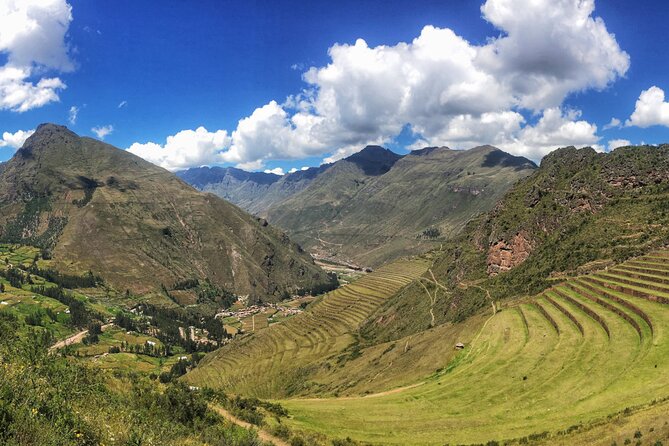
The Sacred Valley can feel like a lot of driving plus a lot of choices. What I like about this specific full-day route is that it’s built as a sequence: you start higher near Cusco, move through classic Inca sites, then land in the lower valley for lunch before finishing with the most famous “ruins + market” combo in Pisac.
For $40, you’re not just buying entrances. You’re buying transport time, guidance through what matters at each site, and a lunch stop that’s timed to keep you functional for the rest of the day. And because it’s capped at 20 people, it usually avoids the biggest chaos you can run into on big-bus excursions.
The trade-off is also clear: it’s a full-day hit list. If you want to linger for photos for a long time, you’ll need to accept that some places are “see the main idea” rather than “tour at museum speed.”
You can also read our reviews of more tours and experiences in Cusco

Morning logistics: a real 6:40 am start (and a long day)
The day begins early. You’ll get picked up from the hotel area around 6:40 am, and the group leaves Cusco around 7:00 am. You’ll meet at the Plaza Mayor area (near the Inca statue at the main square), then spend the next several hours moving between sites.
By the time you add transit between stops, plus ticket lines and short site walks, plan on a day that starts before breakfast logic kicks in and ends around 7:00 pm. This is the kind of day where the best strategy is simple: eat what you can, hydrate steadily, and don’t try to pack in extra activities before or after.
Also note the physical side. You’ll be walking around archaeological areas and through towns, and some surfaces can be uneven. The tour is listed for moderate fitness—good for active travelers, not ideal if you’re expecting an entirely flat, short-stroll itinerary.
Chinchero: textiles, an Inca site, and a quick culture taste
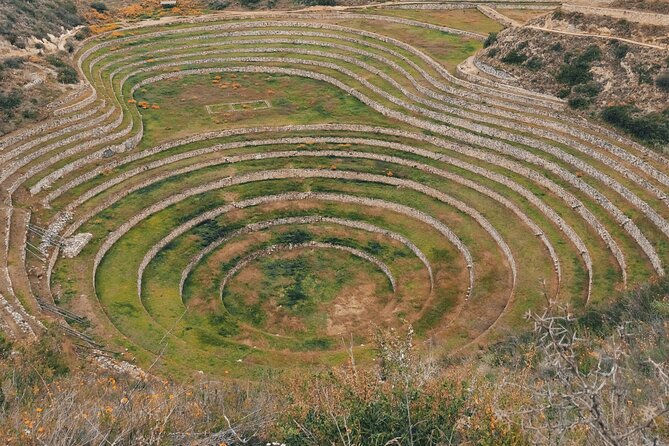
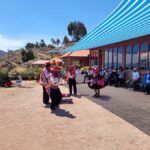
Chinchero is where the day begins to feel distinctly local instead of just archaeological. You start with an archaeological visit in town, and the focus isn’t only on stone. Chinchero is also a place tied to traditional textile work, and it tends to be the stop where you’ll notice local crafts more than you will later.
Why it’s worth your time: Chinchero helps you understand the Valley’s everyday skills alongside the big ruins. Even when you’re spending about 1 hour 30 minutes here, you can still spot the key idea—how Inca-era structures and local traditions coexist in the same places.
The possible snag: Chinchero is also one of the stops where you may find craft shopping. That’s not automatically bad. Just keep your expectations realistic: if you prefer buying later (or only buying when you’re certain), you’ll want to stay in “browse mode” here.
Moray: circular terraces and the Inca “try different climates” idea
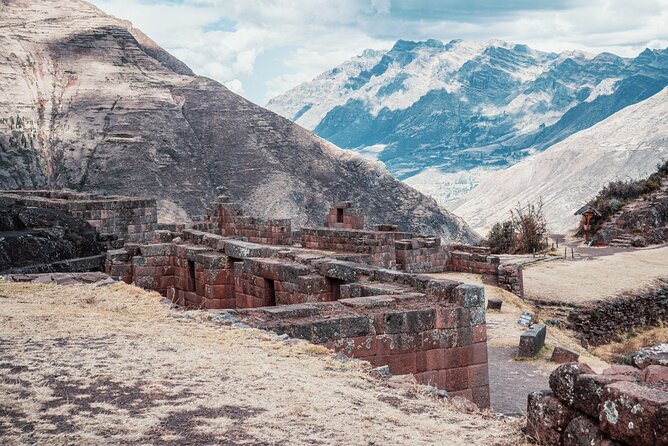
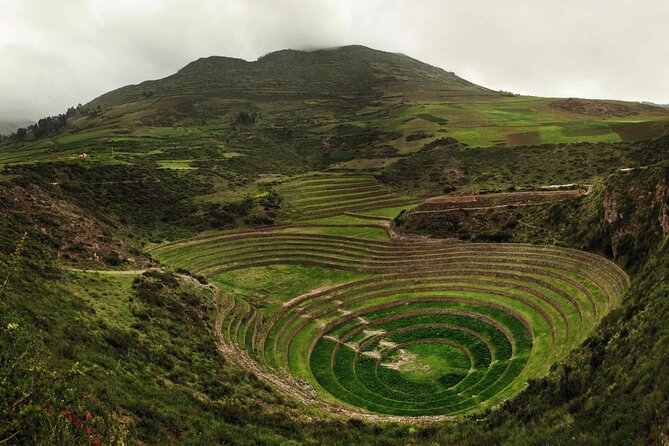
Next comes Moray, a short drive from Chinchero—about 25 minutes. This stop is shorter (about 30 minutes), so you don’t come for a long wander. You come to understand the concept quickly.
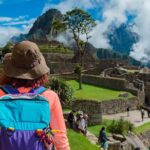
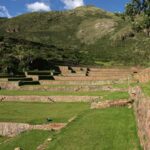
Moray’s signature is the circular agricultural terraces. Some historians have linked these structures to the Inca idea of experimenting with plants from warmer climates. Whether or not every detail is settled, you can still read the terraces as a logic puzzle: the Incas were not just building monuments; they were managing how food could grow in different conditions.
My practical take: go in with curiosity. Look for how the terraces step down and how that shapes sun and temperature. Even in a short visit, you’ll leave feeling like you learned something specific, not just “another ruin.”
Ticket note: entry here is not included, so you’ll need the Tourist Ticket to visit Moray.
Salinas de Maras: the salt wells where evaporation does the work
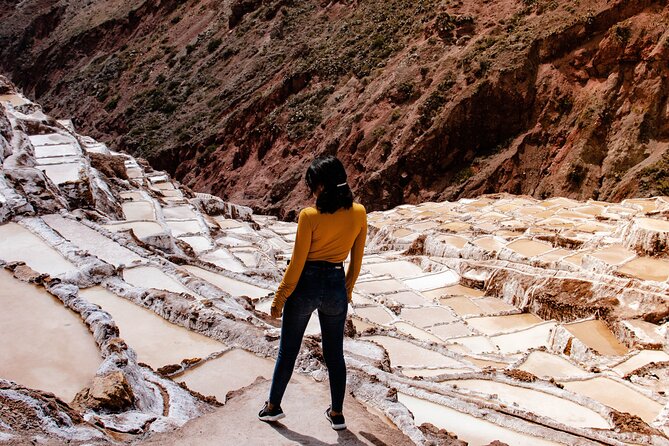
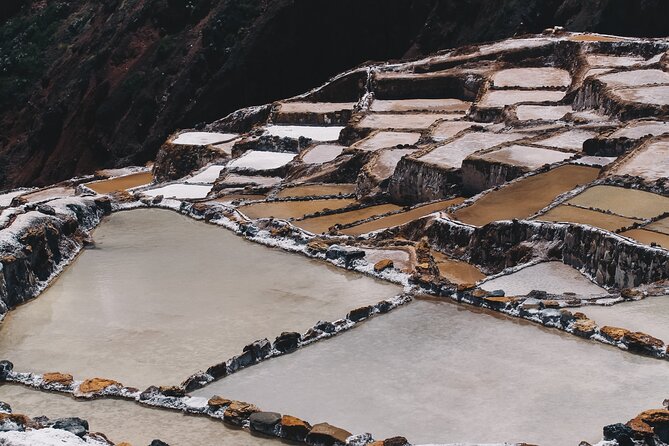
After Moray, you drive about 25 minutes to Salinas de Maras. This is one of the most visually satisfying stops because it’s not abstract. You see dozens of square wells of salt water fed by underground sources. Then comes the core process: when the water hits sunlight, it evaporates, leaving salt behind.
You’ll spend about 30 minutes here. That’s usually enough time to understand the system, take photos, and watch how the landscape looks in different light.
Two practical things to know before you go:
- Bring sunscreen and a hat. This area is sun-forward, and evaporation is literally the point.
- Plan for a basic “site walk,” not a long hike. You’re observing a working landscape more than trekking through a city of ruins.
Cost: admission to Salinas de Maras is 20.00 PEN per person and is not included. You also need to budget your Tourist Ticket separately for other sites, so it helps to do the math before you arrive.



Urubamba for lunch: warm air, buffet fuel, and a midday reset
From the salt mines, you drive to Urubamba. Urubamba sits in the lower part of the Sacred Valley, which means it’s generally a bit warmer than Cusco and higher zones. That temperature change matters because it can make the rest of the day feel more comfortable.
Lunch is included here: a buffet meal in Urubamba town. The buffet setup is a real advantage on a long day. You can eat enough to keep moving, without waiting around for a single plated course.
What I like about this lunch stop is that it acts like a reset button. After salt, terraces, and travel time, you get a chance to warm up, refill water, and make sure your energy holds for the afternoon ruins.
The downside? It’s a buffet, not a gourmet stop. It’s there to keep you going, not to blow your socks off. If you want top-tier fine dining, you’ll do that on a different day.
Ollantaytambo: long stone stairs and a practical timebox
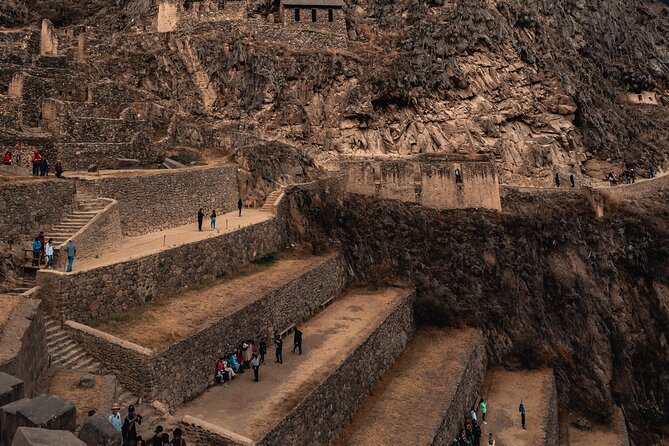
After lunch, you head to Ollantaytambo (about 30 minutes away). The visit is about 1 hour. This is one of the Valley’s headline locations, and the architecture makes it easy to grasp fast.
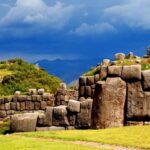
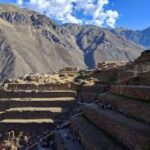
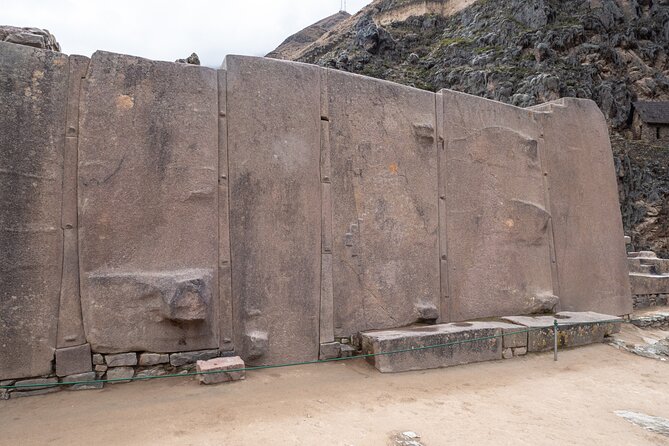
Ollantaytambo is famous for its long stone stairs that lead up to the main complex. Like other Valley sites (including Pisac), it served as an Inca royal palace. The stairs give you a built-in way to explore: you can walk upward, look across the complex, then come back and orient yourself with the town below.
There’s also time in Ollantaytambo town for souvenirs. This is helpful if you want something small and local without adding extra transport.
Ticket note: Ollantaytambo entry is not included unless you have the Tourist Ticket.
Pisac: ruins on the hill and market time (but don’t plan on lingering)
Pisac comes last, and it’s the stop with the most “choose-your-own-pace” feel. You’ll travel about 1 hour 30 minutes to Pisac, spend time at the archaeological complex, and then have time in the town and market area.
Two parts make Pisac special:
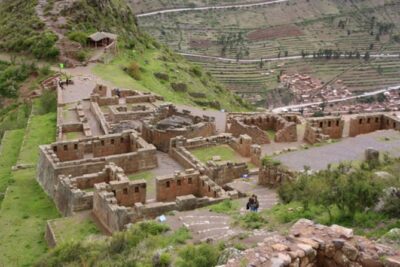
- The archaeological complex is up on a nearby hilltop and has numerous stone buildings tied to Inca nobility.
- The town market gives you a chance to browse traditional stalls and taste local food.
This is also the area where timing can feel tight. The visit is split across ruins and market, so you might not get as long a look at the hilltop as you’d like if you’re the type who wants to roam slowly with zero schedule pressure.
My suggestion: if your priority is ruins photos and reading stonework, go a bit earlier in your allotted time at the hilltop. If your priority is shopping and food, keep your eyes on the market window and don’t let the ruins part swallow everything.
Ticket note: Pisac entry is not included unless you’ve paid for the Tourist Ticket.
Price and value: $40 plus the reality of entrance fees
The headline price is $40.00 per person, with transportation included and a buffet lunch in Urubamba included. That’s the core value: you’re paying for the logistics.
But don’t ignore what’s not included:
- Salinas de Maras: 20.00 PEN per person
- Tourist Ticket (70 soles) needed for Chinchero, Moray, Ollantaytambo, and Pisac
So the real budget is $40 plus the entrance fees. Whether this still feels like a deal depends on your travel style. If you would otherwise rent transport or drive yourself and you’d still want guidance on what to look at, this setup usually makes sense.
The other value piece is time coordination. You avoid the headache of lining up multiple separate tickets and figuring out transit between sites scattered through the Valley.
Where it may not be the best value: if you already know the ruins well and want a slow, flexible day with no shopping stops and extra time at each ruin. In that case, a self-guided plan (or a smaller, more flexible guided day) can be a better match.
Guides, group size, and the shopping-stop question
This tour runs with a maximum group size of 20, and that matters. It generally keeps things orderly for pick-ups, site explanations, and timing between stops.
You’ll also get a guide who explains what you’re seeing. Based on the range of named guides people have had on this route—like Jhonnatan, Andy, Warner, Gustavo, Jonathan, and Ande and Lenny—the common thread is that they bring an Inca-focused point of view and help you interpret what you’re looking at.
About shopping: you’ll see it built into the day at multiple points, including stops where you can browse souvenirs and crafts. Some people love having that cultural window. Others feel there’s too much time spent in sales areas. The practical move is to treat shopping as optional. If something is expensive, you can always wait. If a stop feels long, you can still keep your attention on the explanations and the ruins around it.
What to pack so the day doesn’t beat you
This is a long day with outdoor time in multiple places, so don’t overthink it—just pack for comfort and sun.
Bring:
- Sunscreen and a hat (especially for Maras)
- Water (you’ll want steady hydration across the day)
- Comfortable walking shoes for stone and uneven ground
- A light layer for morning and evening temperature changes
Also, if you’re sensitive to long commutes, keep an easy mindset. The drive windows are part of the experience. Use them to rest your legs and recharge for the next site.
Should you book this full-day Sacred Valley tour?
Book it if you want the Sacred Valley highlights in one efficient day. This is a strong match for first-time visitors who want to see Chinchero, Moray, Salinas de Maras, Urubamba, Ollantaytambo, and Pisac without building a complicated schedule. The included transport and Urubamba buffet lunch make the $40 price easier to justify, especially when you factor in how many distinct stops you get.
Skip it or choose a different format if you’re the type who needs long, quiet time at each ruin. Pisac in particular can feel like a quick hit rather than a slow exploration, and the day is designed to cover many locations, not to linger.
If you do book, the best strategy is simple: come with priorities. Decide what you want most—ruins photos, market browsing, or learning the agricultural and royal-site logic—and then let the tour timing work for you instead of against you.
FAQ
How long is the Sacred Valley tour from Cusco?
It runs about 12 to 13 hours and you return to Cusco around 7:00 pm.
What time does the tour start, and where do we meet?
Pickup begins around 6:40 am, with departure from Cusco around 7:00 am. You meet at the Inca statue at Plaza Mayor de, Cusco, near the main square.
What is included in the $40 price?
Transportation to the attractions is included, and lunch is a buffet in Urubamba town.
What entrance fees should I budget for?
Salinas de Maras costs 20.00 PEN per person. You also need a Tourist Ticket (70 soles) to visit Chinchero, Moray, Ollantaytambo, and Pisac.
What fitness level do I need?
You should have moderate physical fitness. There’s walking at multiple archaeological sites and time in towns.
Can I cancel and get a full refund?
Yes. You can cancel up to 24 hours in advance for a full refund.