REVIEW · SACRED VALLEY TOURS
Sacred Valley (VIP) – Full Day Trip
Book on Viator →Operated by Peru Amazon Trips · Bookable on Viator
Sacred Valley hits fast in one long day. This VIP full-day trip strings together Chinchero’s high plains views, Moray’s Inca terraces, and the salt pools of Maras, with pick-up from Cusco hotels and a bilingual (English/Spanish) guide.
I love that it gives you both the big scenic hits and the nuts-and-bolts Inca thinking, from irrigation and terracing to astronomy. The stops are compact, so you see Ollantaytambo’s water-and-fortress complex and then roll right into Pisac’s sun-stone site and tower terraces.
The one drawback is the logistics and extra payments: you’ll need a Partial Tourist Ticket and you should budget cash for the Salt Mines of Maras, and the day moves at a steady clip.
In This Review
- Key things that matter before you go
- A Long Sacred Valley Day That Still Feels Worth It
- Price and Logistics: $55 Looks Simple, But Budget for Access Fees
- Chinchero at 3,765m: Sunday Market Energy and Inca-Style Stone
- Moray’s Circular Terraces: The Inca Crop Lab Idea
- Maras Salt Mines: The Photo Stop With Real Salt-Pool Drama
- Ollantaytambo at 9,160 Feet: Fortress Drama and Water Temple Logic
- Pisac’s Intihuatana and City of Towers: The Sun, the Stones, and a Legend
- Urubamba Buffet Lunch: A Real Reset (and Vegan Included)
- Pacing, Photo Time, and the Commercial-Side Stops
- Who Should Book This Sacred Valley VIP Trip?
- Should You Book the Sacred Valley (VIP) Full Day Trip?
- FAQ
- What’s the duration of the Sacred Valley (VIP) Full Day Trip?
- Is hotel pickup included?
- What language is the guide?
- Is lunch included, and do they offer a vegan option?
- Do I need to buy a Partial Tourist Ticket?
- Are entrance fees included for all stops?
- How many stops are visited during the day?
- How big is the group?
- When do most people book this tour?
- What’s the cancellation policy?
Key things that matter before you go
- Cusco hotel pickup, not private homes: convenient if you’re staying in the city center
- Partial Tourist Ticket is extra: 70 soles per person
- Bring extra cash for Maras and Moray: Maras salt-mine entry is an additional 20 soles
- Moray is the Inca microclimate lab: circular terraces used for different crops
- Ollantaytambo sits at altitude (9,160 ft): expect breath-with-a-view and stairs
- Pisac’s Intihuatana links to the June solstice: the rising sun alignment is the point
A Long Sacred Valley Day That Still Feels Worth It
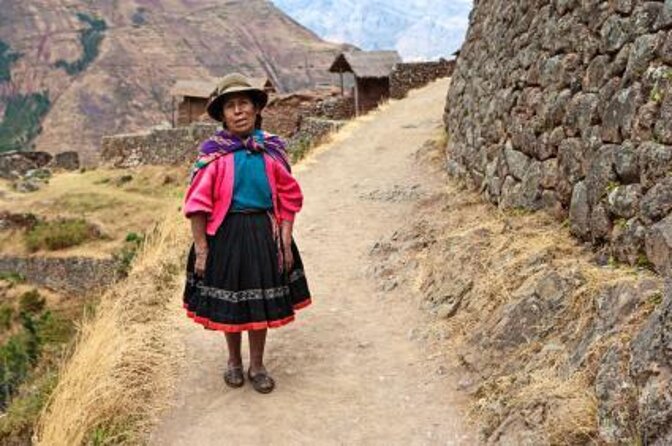
This is a classic “see a lot without slowing to a crawl” Sacred Valley route. You’re out for about 12 hours, and the group is kept to a maximum of 19 people, which helps the whole day feel organized instead of chaotic. Pick-up is included from Cusco hotels, so you skip the hassle of figuring out transport on your own.
What makes this day trip work is the mix of site types. You’re not just looking at ruins behind a fence. You’re seeing how the Incas shaped water, climbed terrain, and timed the year. That’s why Moray and Ollantaytambo feel different from a simple viewpoint: they show systems—terraces, irrigation, and stone architecture built for purpose.
Just be ready for the reality of a day trip: there’s walking, and the day is scheduled tightly. If your idea of a perfect trip is slow wandering with long breaks, this tour may feel a bit pushy. If your idea is maximum Sacred Valley in one shot, this fits.
You can also read our reviews of more tours and experiences in Cusco

Price and Logistics: $55 Looks Simple, But Budget for Access Fees
The advertised price is $55 per person, and it includes hotel transfer in Cusco, a guided tour, a bilingual guide, and a buffet lunch in Urubamba (with a vegan option).
Then come the add-ons you should plan for:
- Partial Tourist Ticket: 70 soles per person (not included)
- Salt Mines of Maras: 20 soles per person (not included)
So the real “all-in” cost is more than the headline price. Is it still good value? For a first-time route that hits Chinchero, Moray, Maras, Ollantaytambo, and Pisac in one day—with lunch and a guide—that extra spend can be worth it. You’re paying for convenience and time.
My practical advice: carry extra cash ahead of time. The tour info is very clear that you’ll want funds ready for admissions, especially around Maras. Don’t assume you’ll always find an ATM nearby, and don’t count on card payments at remote sites.
Also note the pickup rule: hotel transfer is included, but pick-up isn’t from private residences. If you’re staying somewhere outside the standard hotel zones, double-check that your address qualifies.
Chinchero at 3,765m: Sunday Market Energy and Inca-Style Stone
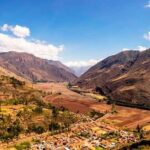
Chinchero is one of those places where the views do half the work. It sits around 3,765 meters on the windswept plains near Anta, about 30 km from Cusco. From here, the Sacred Valley spreads out beneath you, with the Vilcabamba mountain range and Salkantay’s snowy peak on the horizon.
The big draw for most people is the Sunday market, which tends to feel less catered to tourists than Pisac. That matters if you want local life in the mix, not only archaeological stops.
The ruins also have personality. You’ll see traditional mud-brick (adobe) homes, and you’ll also spot a massive stone wall in the main plaza with ten trapezoidal niches. It’s one of the most striking “this was an Inca place” reminders in the area. Terraces are still used for agriculture, which makes the site feel more alive than you might expect.
Time on the ground is about an hour, so this is a “look closely, take photos, ask a couple questions” stop—not a long linger.
Moray’s Circular Terraces: The Inca Crop Lab Idea
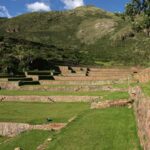
Moray is where the Sacred Valley stops start to feel like engineering class—except it’s beautiful. The main feature is the circular system of agricultural terraces, built with retaining walls and tied to an irrigation approach. The terraces run deep, up to roughly 330 feet.
The Inca genius here wasn’t just building terraces. It was using them to create different conditions for growing different crops. In other words, Moray worked like a crop lab by creating micro-climates. Different levels and exposure can mean different temperatures and moisture patterns, helping the Incas experiment with agriculture.
Moray is scheduled for about 45 minutes. That’s enough time to understand the layout and take in the full “amphitheater” effect—without feeling like you’re racing through.
One caution: even when a stop is listed as ticket-free in the day plan, you’re still told to buy the Partial Tourist Ticket. So don’t show up assuming you can skip all the paperwork.
Maras Salt Mines: The Photo Stop With Real Salt-Pool Drama
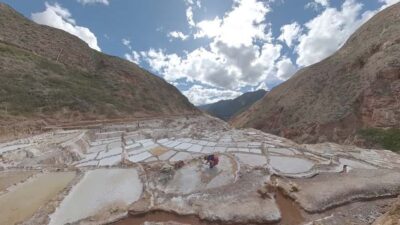
Maras is the rural community of Pichingoto, best known for the salt mines and the famous salt pools. The view here is the reason people bring cameras: the rows of small pools look like a geometric pattern spilled down the mountainside.
It also works for active travelers. There are trails in the area that connect the salt pools with nearby villages like Tarabamba and Pichingoto, so you can pair the sights with a bit of hiking or biking if you’re in that mood.
What’s useful to know is what you’re actually visiting. This is not just a viewpoint. It’s a working-looking salt landscape, and you’ll likely spend your time photographing the pools, looking for the best angles, and reading the scene through the terraces.
You’ve also got a nearby colonial touchpoint: the Sanctuary of Tiobamaba, an adobe church with paintings attributed to Cusco, including a work called The Last Supper. It’s a nice “after the salt, here’s the blend” moment.
This stop runs about 45 minutes. Expect it to feel compact, especially if you’re chasing the best light.
You can also read our reviews of more tours and experiences in Cusco


Ollantaytambo at 9,160 Feet: Fortress Drama and Water Temple Logic
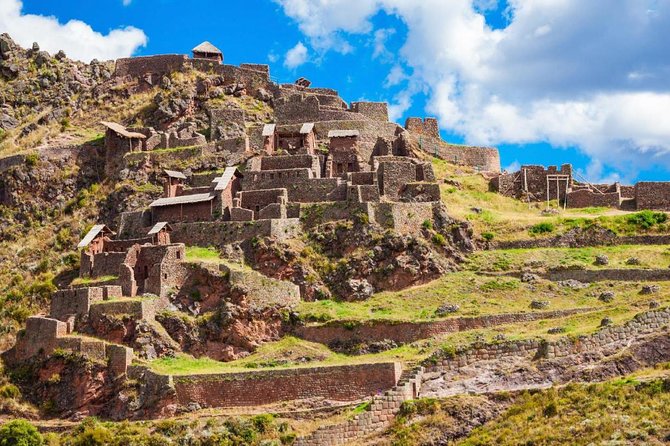
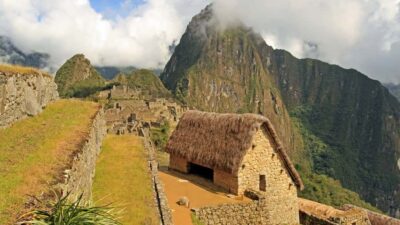
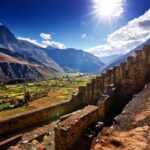
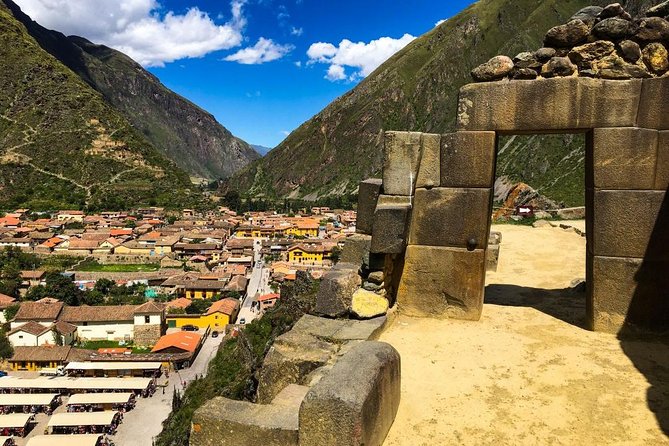
Ollantaytambo is scheduled for about an hour, but it’s the kind of hour that can fly by because there’s a lot to notice. The site is in the province of Urubamba at about 9,160 feet, so you’ll feel the altitude more than earlier stops.
Ollantaytambo stands out because of two big hits side-by-side:
- a ceremonial temple connected to water worship
- a fortress built between mountains to guard the valley
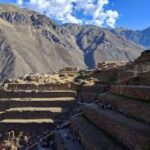
The ceremonial temple includes terraces stacked on terraces, climbed via a steep stairway. You’ll also see the Temple of Inti (the sun god) and structures like the Incamisana, the baths of the Ñustas (princesses), and the Cachiccata funerary towers. It’s one of those places where the names help you connect what you’re looking at to what the Inca planned there.
There’s more: on the side of a hill you’ll notice tiered terraces that look very steep and purpose-built. And the mountain called Pinculluna (also referred to as Tunupa) has traces of Inca architecture that seem to have served as storage for foodstuffs.
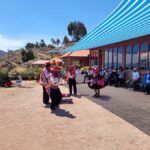
Ollantaytambo isn’t only ruins. It’s also a meeting point for nearby communities, and you may spot groups like the Huayruros de Willoc recognizable by their red and black ponchos and hats.
Pisac’s Intihuatana and City of Towers: The Sun, the Stones, and a Legend
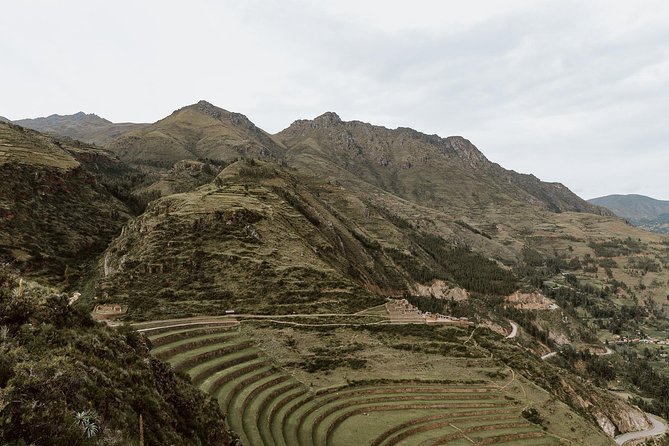
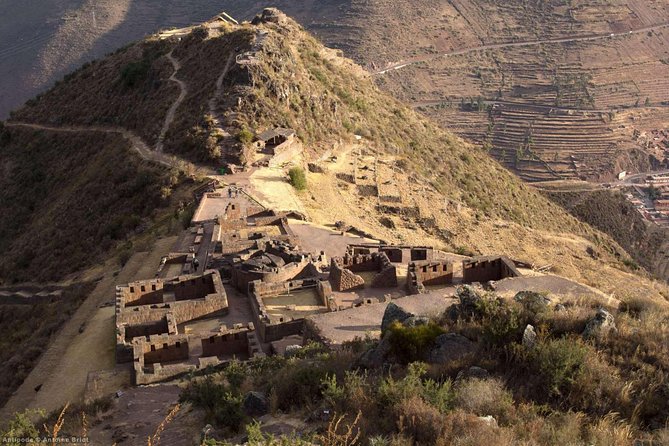
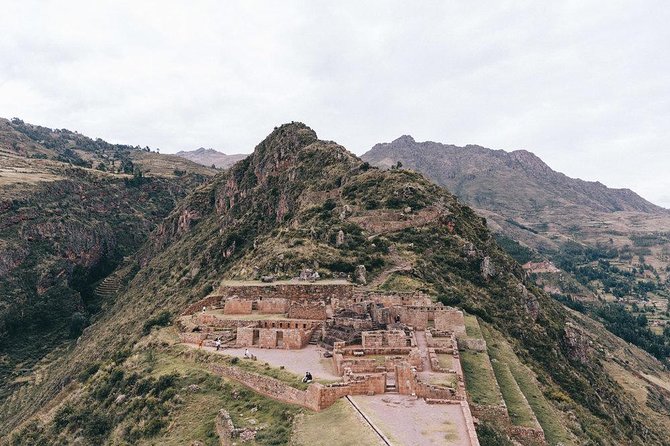
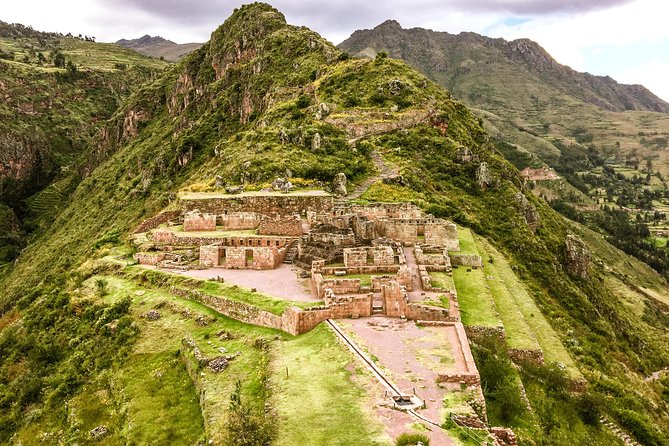
Pisac is the grand finale stop on many Sacred Valley days, and this one gives it about an hour. The place is famous for stone-block walls with carefully balanced proportions and joints—basically, stonework that looks planned down to the millimeter.
The name Pisac comes from Quechua and relates to a partridge, the kind of bird found locally. The site itself is often compared to an Inca estate, tied to the legacy of Pachacutec. You see terraces, ceremonial spaces, palaces, walls, and towers connected across the mountain.
The highlight many people aim for is Intihuatana, often described as the temple linked to the sun. The name translates roughly to sundial, and the idea is that the structure functioned like an astronomical marker. The key detail to remember: it’s considered aligned with the rising sun at the June solstice, marking the winter onset.
Then there’s the area called La ciudad de las torres (City of the Towers). People connect these developments to water channels that still exist today. The edges of the mountain have around 20 towers, built into the slopes.
And if you like myth with your monuments, don’t skip Ñusta Encantada (Enchanted Princess). The formation is said to resemble a woman carrying saddlebags, shaped into stone by an old legend. The story includes a princess named Inquill Chumpi and an Inca prince (Asto Rimac) building a bridge in one night—then both turning into stone when the princess looks back at the wrong moment.
Short time, big payoff: Pisac is where this day trip can either feel rushed or feel perfectly efficient, depending on what you like. If you’re the type to read stone details while you walk, you’ll enjoy the hour.
Urubamba Buffet Lunch: A Real Reset (and Vegan Included)
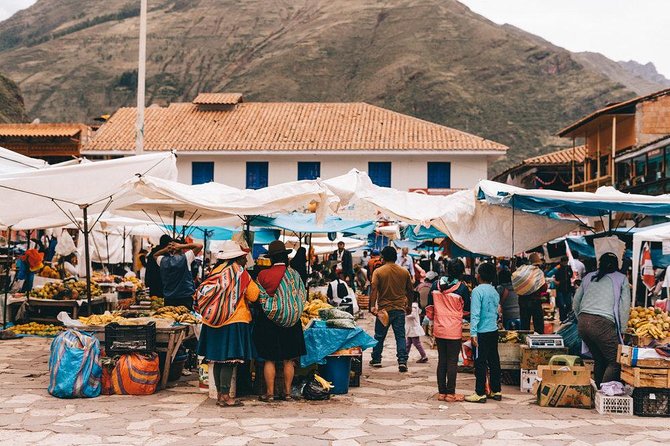
Lunch is in Urubamba and is included as a buffet. This matters more than it sounds. After high-altitude stops, a proper meal can keep the day from turning into a blur.
The tour also includes a vegan option, so you’re not stuck hunting for something bland or hard-to-find. I like that the lunch isn’t just a checkbox; it’s scheduled as a refuel moment in the middle of a packed route.
Plan to use the break strategically. This is when you can refill water, check your photos, and mentally prep for the next mountain of walking.
Pacing, Photo Time, and the Commercial-Side Stops
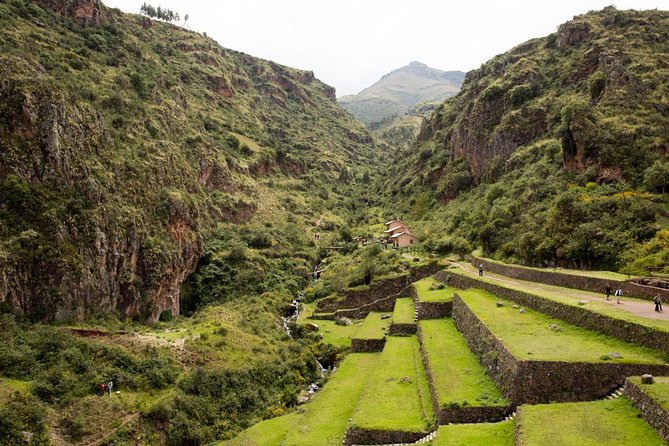
This is a day trip with momentum. Many people enjoy it because it’s tightly guided, and the bilingual aspect helps. When the guide speaks both English and Spanish well, you get clearer explanations fast, and you spend more time looking and less time guessing.
Guide quality can shape your experience. On runs of this tour, guides such as Richard, Irving, Jhonnatan, and Warner have been mentioned as helpful and friendly, including with photo tips and keeping the schedule moving.
Still, there’s a tradeoff: this route can feel like a Reader’s Digest version of Sacred Valley. You’ll likely do quick walking between viewpoints, and there can be stairs at stops like Ollantaytambo’s terraces.
One more factor: some versions of this day include commercial side stops—places like an alpaca processing business or souvenir shopping stops such as salt and silver shops, plus a jewelry stop toward the end of the day. This doesn’t have to ruin the trip, but it can. If you hate being brought to sales counters, go in with your expectations set: you can browse quickly, use the bathroom if needed, and move on.
If you’re sensitive to long bus rides, also consider that the vehicle can feel loud and distracting on a long day. Bring whatever helps you tolerate travel time—earplugs, for instance.
Who Should Book This Sacred Valley VIP Trip?
Book it if you want:
- A one-day hit list of major Sacred Valley sites
- a guide who can explain what you’re seeing in English and Spanish
- included lunch in Urubamba and a vegan option
- a small-to-medium group size (max 19) so the day stays organized
Skip it or compare alternatives if you:
- want lots of quiet time in just one or two sites
- hate extra payments and shopping-style detours
- need a slower pace to take photos or move comfortably
This trip is a good fit for first-timers and time-crunched travelers. If you already know Sacred Valley deeply and want more time for hiking, farming terraces, or local neighborhoods, you might prefer a longer stay.
Should You Book the Sacred Valley (VIP) Full Day Trip?
My take: this is a smart choice when your priority is seeing the core Sacred Valley highlights in one day and you’re okay with a steady pace.
If you book, do three things and you’ll enjoy it more:
- Bring cash in soles for the Partial Tourist Ticket and the Salt Mines of Maras
- wear shoes for stairs and quick walking
- set a rule for yourself about shopping stops: browse fast or skip them entirely
If you want the Sacred Valley feeling slow, lived-in, and unhurried, then it may be worth choosing a multi-day plan instead. But if one day is all you have, this VIP route is one of the more efficient ways to connect the dots between Inca agriculture, astronomy, and fortifications.
FAQ
What’s the duration of the Sacred Valley (VIP) Full Day Trip?
It runs for about 12 hours.
Is hotel pickup included?
Yes, pickup is included from Cusco hotels. It is not included from private residences.
What language is the guide?
The guide is bilingual, offering English and Spanish.
Is lunch included, and do they offer a vegan option?
Yes. You’ll get a buffet lunch in Urubamba, and there is a vegan option.
Do I need to buy a Partial Tourist Ticket?
Yes. A Partial Tourist Ticket costs 70 soles per person and is not included.
Are entrance fees included for all stops?
The Salt Mines of Maras entrance fee is not included and costs 20 soles per person. You should also expect extra charges related to admissions for Maras and Moray.
How many stops are visited during the day?
The day includes stops at Chinchero, Sacred Valley (Moray), Maras, Ollantaytambo, and Pisac.
How big is the group?
The tour has a maximum of 19 travelers.
When do most people book this tour?
On average, it’s booked about 48 days in advance.
What’s the cancellation policy?
Free cancellation is available up to 24 hours in advance for a full refund. If you cancel less than 24 hours before the start time, the amount paid is not refunded.