REVIEW · COOKING CLASSES & FOOD TOURS
The 10 Tastings of Cusco With Locals: Private Food Tour
Book on Viator →Operated by Withlocals · Bookable on Viator
Cusco is a feast for your eyes and your stomach. This private food tour stitches together real local eating spots with major landmarks, so you’re not just sampling food—you’re learning how Cusco thinks about it.
I especially like the private, only-you-and-the-guide format (no group herding), and the way tastings happen inside places locals actually use, like Mercado Central de San Pedro. One drawback to keep in mind: a few past diners felt the number of tastings or the overall value didn’t always match the promise of 10, so it helps to ask up front what will be included for your group.
In This Review
- Key highlights to know before you go
- A Private Taste Route Through Cusco’s Old City
- Price, Portions, and What You’re Really Paying
- Meeting Point and Pace at Cusco Altitude
- Before the First Bite: Santa Clara and the National College of Sciences
- Mercado Central de San Pedro: Juice, Chocolate, and Big Corn
- Potato Power at Arco de Santa Clara
- Tambomachay Snack Stop: Empanada-Style Bites
- Qorikancha Ceviche and Pisco Sour by the Temple Walls
- Fried Pork Near Qorikancha: Onions and Mint on a Baguette
- La Merced Church Break: A Baroque Pause Between Bites
- Iglesia de la Compañía de Jesus: Coffee Shop and a Local Pastry
- Qorikancha Landmarks Again: Inca Temple Context
- Colegio Nacional de Ciencias: Ending Near a Local School
- Real-World Guide Styles: Angelo, Fabrizio, and Harry
- Who Should Book This Cusco Food Tour With Locals
- Should You Book This Cusco Food Tour With Locals?
- FAQ
- How long is the 10 Tastings of Cusco With Locals tour?
- Is this tour private or shared with other people?
- What’s included in the price?
- Are vegetarian alternatives available?
- Are hotel pick-up and drop-off included?
- Where does the tour start?
- Is alcohol included in the tastings?
- How much walking is involved?
- Does the tour include any major sights besides food?
Key highlights to know before you go
- Private guide pace means you can slow down for photos or speed up if you’re starving
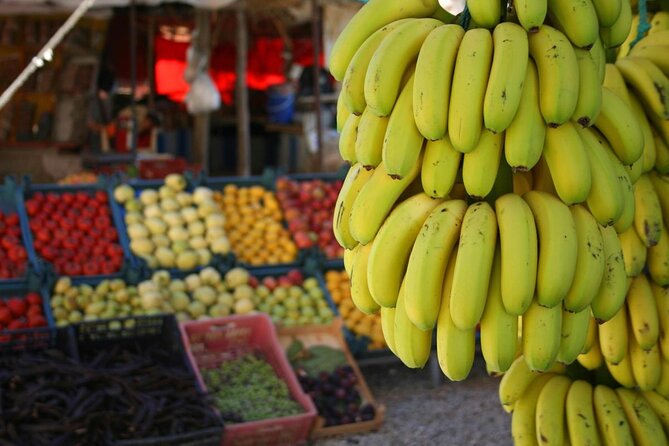
- Mercado Central de San Pedro gives you a true local baseline for juices, chocolate, and snacks
- Qorikancha stops connect Inca-era Cusco with classic dishes like ceviche and pisco sour
- Vegetarian alternatives are included, and the guide can adjust for dietary restrictions
- Major sights built into the route (Santa Clara, La Merced, Iglesia de la Compañía de Jesus) without feeling like a museum day
A Private Taste Route Through Cusco’s Old City
This is the kind of tour that works because it doesn’t treat food like a checklist. You start with architecture and convents, then move into markets, then land right by the big Cusco landmarks—while your guide keeps the story tied to what you’re eating.
You’ll be walking through central Cusco on a route that’s easy to follow with a local guide. And since it’s private, you’re not negotiating around other couples’ snack speeds or someone who always needs one more minute to find the meeting point.
Best fit: you want an easy intro to Cusco flavors on day one or day two, and you like your travel guided by real people, not a scripted group tour.
Potential mismatch: if you’re expecting a long sit-down meal with heavy portions, this is more of a tasting-and-walk experience than a full lunch replacement.
You can also read our reviews of more food & drink experiences in Cusco
Price, Portions, and What You’re Really Paying
The tour costs $90.11 per person and runs about 3 hours. That price sits in the same ballpark as larger meal-focused tours, so the value question is fair.
Here’s how I’d think about it: you’re paying for three things at once—(1) 10 food and drink tastings, (2) a guide who explains what you’re eating and where it comes from, and (3) city highlights threaded between stops. For a lot of people, that mix feels like good value, especially when the guide really leans into local culture and story.
That said, some reviews complained they counted fewer than 10 tastings or felt the food quantity didn’t match the cost. If that’s your worry, your best move is simple: set expectations early. Ask your guide to clearly confirm what counts as a tasting (especially if you’re skipping alcohol or have dietary limits).
Meeting Point and Pace at Cusco Altitude
You start at C. Sta. Clara 317, Cusco 08002, and the tour ends back near the same place. There’s no hotel pickup and drop-off, so plan on getting yourself to the meeting point before the start.
You should have a moderate physical fitness level. Cusco walking is mostly about steady pace, but altitude can turn a normal walk into a breathing exercise. I suggest you dress for cool-to-mild weather and keep a light layer you can adjust as you move between plazas and shaded market lanes.
Also, the tour is described as near public transportation. If your timing is tight, that flexibility helps, but it still pays to arrive a little early so you don’t rush the first tasting.
Before the First Bite: Santa Clara and the National College of Sciences
The tour begins with a short “look around first” moment at two impressive landmarks: the UNESCO-listed National College of Sciences and Arts and the 16th-century Santa Clara convent.
This is smart pacing. It gets you oriented to Cusco’s historic center before you start eating your way through it. It also sets the tone: you’re not just in Cusco for food; you’re in Cusco for how food, history, and daily life overlap.
If you’re the kind of person who likes a quick photo stop and a few solid details, you’ll appreciate this warm-up. If you prefer your tours strictly food-only, you might want to mentally treat this as a brief palate-and-photo reset.
Mercado Central de San Pedro: Juice, Chocolate, and Big Corn
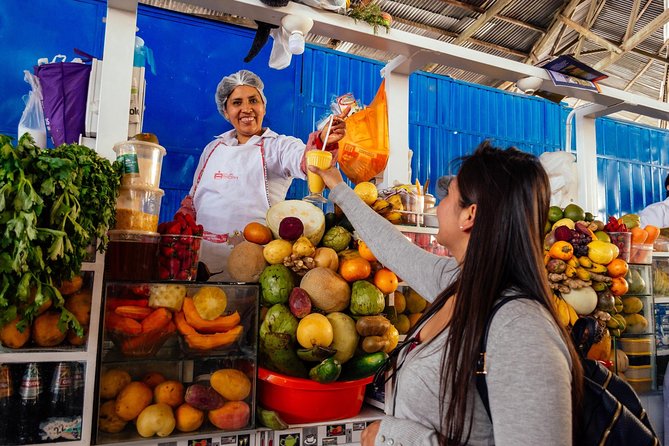
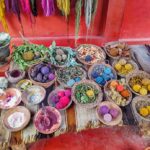
One of the most local-feeling stops is Mercado Central de San Pedro, where you mingle with Cusco locals. Expect freshly squeezed fruit juice as part of the tastings, plus a first taste of the market style: snack sized, street practical, and constantly moving.
You’ll also try something memorable for sheer scale: the tour notes tasting the largest piece of corn you’ll likely see, served with cheese. It sounds goofy, but it works. In a country where corn takes many forms, this kind of stop shows you what “everyday starch” looks like in real life.
From past tours, guides have also led people through chocolate moments in the market area. This is a good stop if you want sweet and savory without needing a menu.
Possible drawback: markets can be crowded. A private guide helps you cut through that chaos, but you’ll still be in the real flow of a working market.
You can also read our reviews of more tours and experiences in Cusco
Potato Power at Arco de Santa Clara
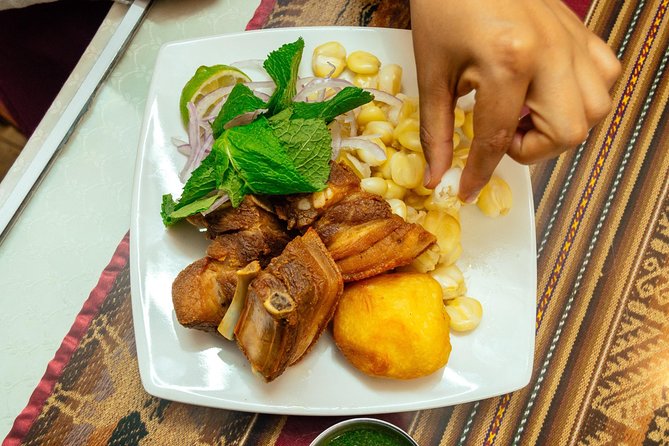
Next you head to the area near Arco de Santa Clara, where the tour focuses on potatoes—specifically the idea that Peru grows thousands of potato varieties.
That sounds abstract until you see it paired with food culture in the same stop. Your guide will connect the local varieties to how people cook and eat in Cusco, which makes the tasting feel less random and more like a lesson you can taste.
This is a great stop for food nerds. It’s also great for casual eaters, because potato-based flavors tend to be comforting and familiar, even when the preparation is new to you.
Tambomachay Snack Stop: Empanada-Style Bites
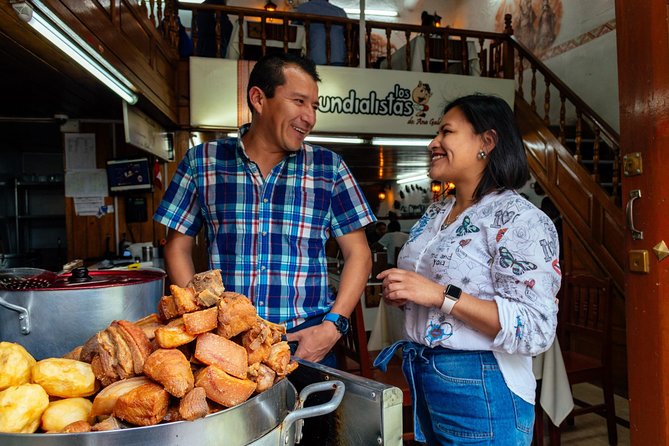
At Tambomachay, you grab a quick snack that the tour describes as resembling empanadas. The goal here is speed and variety—something portable that fits the walking rhythm.
This is one of those stops that can be easy to underestimate if you think “tasting” means “tiny.” In practice, these snack breaks often become the bite you remember later, especially if you like savory pastries and hand-held food.
Keep an eye on your stomach planning here. By now, altitude plus walking adds up. If you’re prone to getting lightheaded, take your time, sip water, and don’t rush the first bites.
Qorikancha Ceviche and Pisco Sour by the Temple Walls
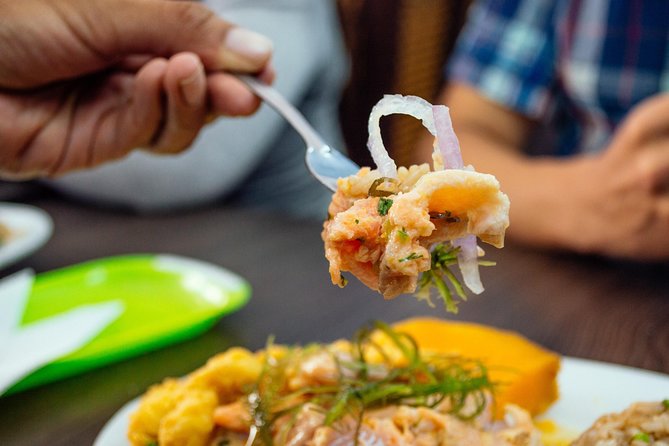
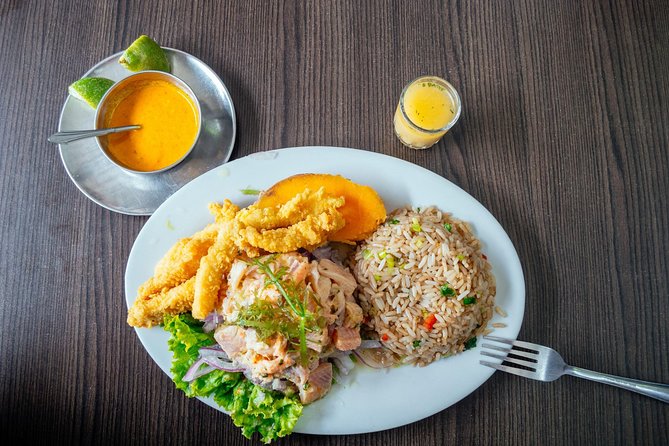
Near Qorikancha, you get a classic Peruvian flavor moment: the tour notes ceviche made with fresh fish mixed with citrus and chili, plus the chance to wash it down with a pisco sour.
This is a high-payoff stop. It’s not only delicious; it’s also one of the best examples of how Cusco food uses strong, punchy flavors to keep things exciting. The citrus and chili in particular can feel like a reset for your palate after market sweets and snack starches.
Alcohol note: the tour includes pisco sour in the tastings, but past diners have reported that their guides were willing to tailor the food and drink choices—for example, creating an approach for people who don’t drink alcohol. If that’s you, tell your guide early and ask how substitutions are handled.
Fried Pork Near Qorikancha: Onions and Mint on a Baguette
Another stop near Qorikancha shifts gears to a savory sandwich-type dish: fried pork typically served on a baguette with onions and mint.
This is the stop that gives you more “meal texture” than the snack bites. It also helps balance the earlier stops that lean toward juice, pastries, and seafood.
If you’re vegetarian, don’t panic. The tour includes vegetarian alternatives, and your guide can offer swaps based on what’s available at the local spots you visit. I’d still check details with your guide so you know how the tasting count will work for your version of the menu.
La Merced Church Break: A Baroque Pause Between Bites
Between food stops, you take a break to gaze at La Merced, described as baroque and one of Cusco’s architectural gems. This stop matters because it’s not just scenery—it’s recovery time.
Walking Cusco at altitude can make you forget to slow down. A short church break gives your body a chance to settle and gives your mind a chance to catch up. If you like architecture, this is a nice “taste of the city” moment that won’t drag.
Iglesia de la Compañía de Jesus: Coffee Shop and a Local Pastry
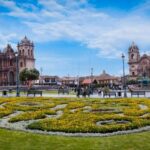
Then comes Iglesia de la Compañía de Jesus, where the tour includes a stop in Cusco’s oldest coffee shop area, along with a sweet bite nearby. This is part tasting, part caffeine reset—great for rounding out a walk tour before you feel overcaffeinated or underfed.
In prior experiences with guides from this tour, people have highlighted how well the guide can tailor what you eat and where you go for coffee and dessert. If you’re a dessert person, you’re likely to enjoy this segment.
If you’re not a coffee drinker, ask your guide what the alternatives look like. The tour is structured around tastings, so substitution is usually possible with local shop choices.
Qorikancha Landmarks Again: Inca Temple Context
The tour hits Qorikancha again with a focus on what it was in the Inca Empire. It’s described as the most important temple in the empire, located in Cusco, the Inca capital.
Repeating the landmark can feel repetitive on paper, but in a guided tasting format it often makes sense. First you experience the location through food nearby. Later, you re-anchor the site through context—so the flavors you had earlier connect to place and story.
This stop is best if you like to understand the “why” behind a place, not just photograph it.
Colegio Nacional de Ciencias: Ending Near a Local School
The tour includes a stop at Colegio Nacional de Ciencias, basically tying off the route with another real slice of Cusco life—this time through an educational landmark rather than a marketplace or a church plaza.
It’s a subtle ending, but that’s the point. You finish the walk back near where you started, still surrounded by normal city rhythms. No awkward sprint to a final restaurant. No “where did our guide go” moment.
If you’re hoping for a dramatic last course, this isn’t that. If you want a tidy, satisfying close to a walking food tour, it works.
Real-World Guide Styles: Angelo, Fabrizio, and Harry
A huge part of how this tour feels depends on the guide. One name that shows up often is Angelo, described as energetic and very friendly, with excellent English and lots of room for questions. People loved that he explained history and culture while still keeping the focus on the food.
Other guide names also appear in the record, including Fabrizio and Harry. One strong theme: guides don’t just point and snack. They make the route feel personal, and some will even help with practical stuff beyond the tasting—like recommending restaurants afterward or assisting with things such as SIM cards.
If you’re sensitive to group-tour pacing, this is where private format becomes real. Your guide can slow down for your questions, tailor your food choices if you don’t want alcohol, and adjust for picky eating.
The only caution: because experiences can vary, don’t assume your tour will automatically hit the exact number of tastings you expect. If you care about that, ask for a clear rundown of tastings at the start so there are no surprises.
Who Should Book This Cusco Food Tour With Locals
You’ll likely be happy if you:
- want 10 tastings plus city landmarks in one 3-hour walk
- prefer private pacing over a group tour
- like learning the story behind ingredients, from potatoes to Inca temple context
- appreciate vegetarian alternatives and want dietary substitutions when needed
- want a strong introduction to Cusco on your first days
You might skip it if you:
- mainly want a full lunch with heavy portions
- are very strict about the exact number of tastings and value per bite
- dislike market settings (crowds and motion are part of it)
- need hotel pickup (this tour starts at a specific city meeting point)
Should You Book This Cusco Food Tour With Locals?
I’d book it if your goal is simple: walk central Cusco, eat local, and come away feeling like you understand the place. The blend of market stops, classic Cusco flavors near Qorikancha, and sight breaks like La Merced gives you more than just food.
But if you’re worried about value or quantity, handle it like a smart traveler. Send a dietary note ahead of time, and on arrival ask how the 10 tastings will be handled for your specific order (especially if you’re skipping alcohol). That one conversation can prevent the kind of disappointment that comes from mismatched expectations.
If you want a guided taste of Cusco’s daily life, this is a strong bet—private, central, and built around local eating rather than tourist-only menus.
FAQ
How long is the 10 Tastings of Cusco With Locals tour?
The tour lasts about 3 hours.
Is this tour private or shared with other people?
It’s private. Only you and your local guide participate.
What’s included in the price?
The tour includes a local guide and 10 food and drink tastings, with vegetarian alternatives.
Are vegetarian alternatives available?
Yes. Vegetarian alternatives are included.
Are hotel pick-up and drop-off included?
No. Hotel pick-up and drop-off are not included.
Where does the tour start?
The meeting point is C. Sta. Clara 317, Cusco 08002, Peru.
Is alcohol included in the tastings?
A pisco sour tasting is part of the tour near Qorikancha. If you don’t drink, the tour notes alternatives are offered for dietary restrictions.
How much walking is involved?
You should have a moderate physical fitness level since it’s a walking tour through central Cusco.
Does the tour include any major sights besides food?
Yes. It includes city highlights between food stops, such as Santa Clara convent, Arco de Santa Clara, Qorikancha, La Merced, and Iglesia de la Compañía de Jesus.