REVIEW · MARAS & MORAY SALT MINE TOURS
Sacred Valley VIP Tour with Maras and Moray from Cusco
Book on Viator →Operated by Machu Picchu Road Trip · Bookable on Viator
Cusco in the morning, Inca ruins by lunch. This Sacred Valley VIP day tour strings together the biggest Sacred Valley hits with hotel pickup/drop-off and a guide who talks history without dragging you in circles. You get a traditional Peruvian lunch in Urubamba and a smart route that covers markets, agriculture experiments, and major archaeological stops.
I especially like the mix of experiences: Chinchero and Pisac markets where textiles and crafts show up for real, not just as souvenirs, plus the geology-and-farming combo at Maras Moray and Salinas de Maras. I also appreciate that the tour caps at 18 people, so the day feels organized instead of chaotic.
One possible drawback: the day is fast. You’ll spend limited time at each site, and entrance fees aren’t included, so you’ll want cash on hand for the archaeological centers and the salt flats.
In This Review
- Key things I’d plan for on this 11-hour Sacred Valley day
- Cusco pickup and a full-day Sacred Valley route that actually fits in time
- Chinchero: royal Inca roots and a textiles market you can browse for real
- Maras and Moray terraces: circular experiments and the story locals connect to Pachamama
- Salinas de Maras: 3,000 wells of sun-dried salt
- Ollantaytambo: the Inca village and ruins above the square
- Urubamba lunch break: where the day slows for a traditional meal
- Pisac archaeological park and market: a smart spot to shop for crafts
- Guide and language reality: bilingual tours don’t always split evenly
- Price and entrance fees: the $45 is the transport + guide, not the site tickets
- Staying comfortable on an 11-hour route (without turning it into a chore)
- Should you book the Sacred Valley VIP Tour with Maras and Moray?
- FAQ
- What time does the Sacred Valley VIP tour start in Cusco?
- How long is the tour?
- Is hotel pickup and drop-off included?
- How many people are in the group?
- What’s included in the price?
- What isn’t included?
- Are there entrance fees at Maras Moray and Salinas de Maras?
- Where do the main stops happen during the day?
- Is lunch included, and what kind is it?
- Do I need to bring cash for entrance fees?
Key things I’d plan for on this 11-hour Sacred Valley day

- Start early (7:00 am) so you can hit multiple stops before crowds and heat build up.
- Entrance fees are extra: the tour price covers transport and the guide, not site admission.
- Maras and Moray are short stops, so if you love photos and slow wandering, bring your patience.
- Lunch is built in at Urubamba, which makes the long day easier to manage.
- Markets matter here: Chinchero and Pisac are core parts of the route, not optional add-ons.
- Bilingual guide delivery can vary depending on how explanations are paced in English vs. Spanish.
Cusco pickup and a full-day Sacred Valley route that actually fits in time
This tour runs about 11 hours and starts at 7:00 am from Plaza Regocijo (the meeting point is listed as Plaza Regocijo F2M9+5X2, Cusco). You’ll get group transport and return to the same meeting point at the end. For a Sacred Valley itinerary, that kind of round-trip convenience matters—Cusco mornings can be messy, and you don’t want to burn half your day figuring out transport.
The group size limit is 18 travelers. That’s a sweet spot: small enough for the guide to keep track of people, but big enough that you’re not stuck negotiating every timing detail. You’re also traveling with a guide providing English and Spanish, which helps if your group splits between languages—even if you’ll notice the explanations may be more detailed in one language at certain stops.
This is a day circuit, not a slow scenic drive. Expect “see it, learn it, move on.” If you’re the type who likes to linger in one place, you may feel like the pace is tight. If you want one day to check off the top Sacred Valley sights, this format is exactly what it’s designed for.
You can also read our reviews of more tours and experiences in Cusco

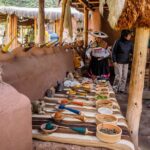
Chinchero: royal Inca roots and a textiles market you can browse for real
Chinchero is about 28 km from Cusco on the tarmac route toward Urubamba. The stop gives you two different flavors of culture in one place.
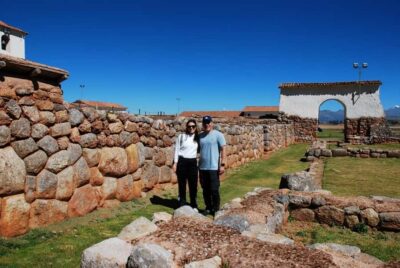
First, you have the remains of what was described as a royal estate linked to Tupac Inca Yupanqui, built on Inca foundations with later colonial construction. Even if you don’t memorize every label, it’s the kind of layered site where you can feel the “before and after” of Inca and colonial eras.
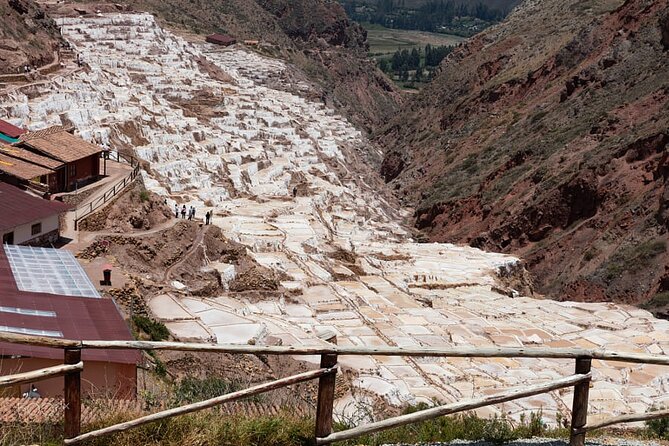
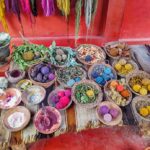
Then there’s the main draw for many people: the artisanal market. This market began as bartering for agricultural goods between valley communities and upper regions. Today, it’s a colorful, moving scene where you can spot textiles and crafts in pre-Columbian style. That matters because you’re not only looking at artifacts—you’re seeing how craft traditions still play a role in daily life.
Time is about 40 minutes here. That’s enough to walk the market aisles, get your bearings, and ask a few questions without feeling rushed out the door. Tip: if textiles are on your shopping list, go here first. Prices and selection often look different between markets around the valley than they do in central Cusco.
Maras and Moray terraces: circular experiments and the story locals connect to Pachamama
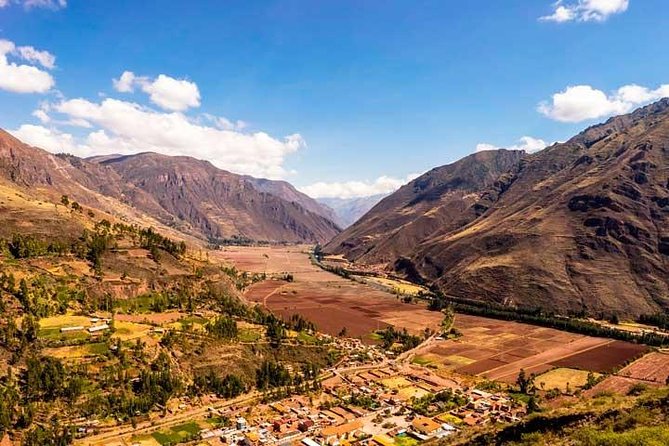
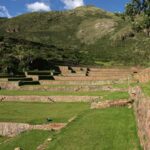
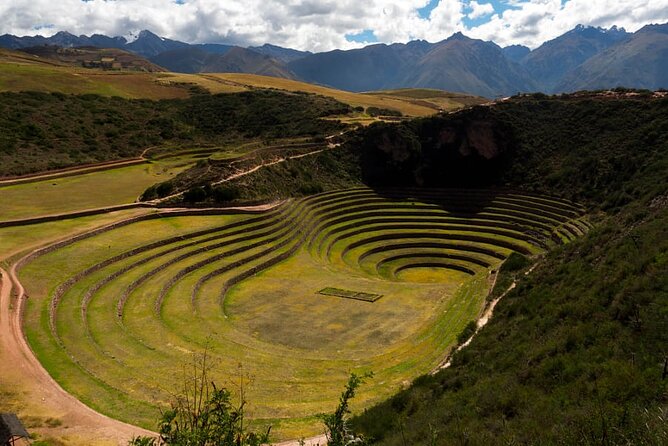
The Moray–Maras area is about 7 km from Maras and about 1 hour from Cusco city via the Chinchero route. The itinerary frames Moray as one of the most spectacular stops, with circular platforms of different sizes.
What you’re looking at isn’t random stone shapes. The terraces are described as agricultural experimentation—a system that used the layout to create different growing conditions. And the tour also shares a spiritual interpretation: these are considered places of concentration of female energy, tied to Pachamama (Mother Earth). You’ll often hear visitors focus only on the engineering side; this stop gives you both.
The scheduled visit here is around 30 minutes and the admission ticket isn’t included. That shorter window is the trade-off for fitting Moray and then continuing to Salinas de Maras the same day. If you want close-up detail, pick a strategic spot early—don’t wait until the last five minutes to start taking photos.
Also note: this is one of those stops where the guide’s explanations can make the difference between “cool ruins” and “oh, that’s how they worked.”
Salinas de Maras: 3,000 wells of sun-dried salt
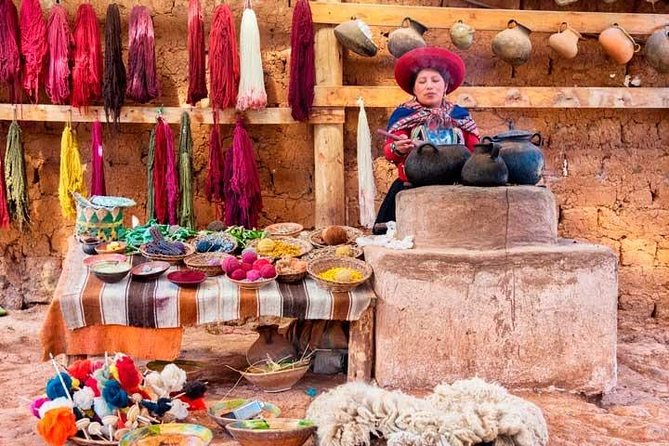
After Moray, you head to Salinas de Maras, located northwest of the town of Maras. This area is often called salt mines, but it’s more specific than that: there are about 3,000 small wells.
The process described on the tour is classic and physical. Saltwater comes from an underground stream. The water is channeled into the small basins, then it evaporates in the sun until salt remains and can be sold.
This stop is about 30 minutes and, again, admission isn’t included. The time is tight, but the visual is strong enough that you can still get great photos and understand the basic system fast. Just keep in mind the day’s pace: by the time you arrive, you’ve already spent hours on the bus, so this is a “quick hit” that works best if you’re ready to watch, not roam.
Practical note: because site fees are extra, your day can feel smoother if you plan to pay admissions on the spot—bring cash just in case.
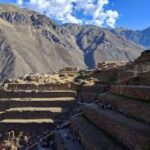
Ollantaytambo: the Inca village and ruins above the square
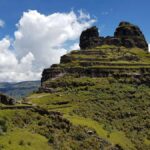
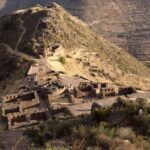
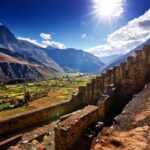
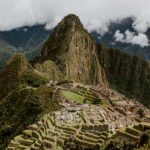
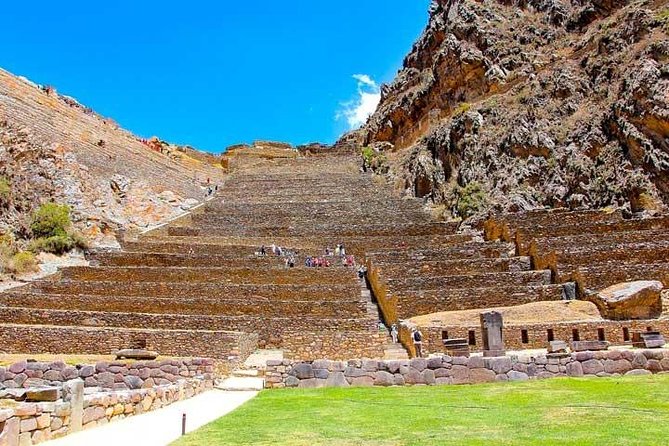
Next up is the Archaeological Park Ollantaytambo, described as a typical Inca village about 21 km from Urubamba at roughly 2,800 m elevation. The area is named after Ollanta, tied to a famous story about an affair with an Inca princess.
One of the most preserved sections is north of Hanan Huacaypata Square, with 15 blocks of mansions built on stone foundations. On top of that, key buildings on the hill include the Temple of the Sun, the Intihuatana, and the Baths of the Princess.
The tour duration here is about 50 minutes. That’s longer than the markets and comparable to other “big” sights on the route, which helps because Ollantaytambo is a place you can actually read as an environment, not just a single landmark.
If you like your archaeology with context, this is where the guide’s storytelling tends to pay off. You’re looking at a lived-in village layout tied to ceremonial and practical spaces. It’s also the kind of site where you start noticing how Inca planning reused terrain instead of fighting it.
Urubamba lunch break: where the day slows for a traditional meal
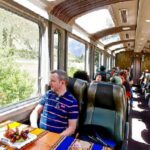
Urubamba is the lunch and rest point. The tour schedule gives you about 40 minutes, and lunch is included as a buffet with Peruvian cuisine.
This stop is valuable because it keeps you from timing chaos later in the day. You’re not guessing where to eat; you’re not hunting for a menu in a language you don’t speak. It’s also a chance to reset after the earlier sites.
If you’re sensitive to altitude or fatigue, treat lunch as your checkpoint: drink water, eat something steady, and don’t sprint out the door. Your afternoon still includes two more major stops—Pisac and its archaeology/market area, plus the return drive.
Pisac archaeological park and market: a smart spot to shop for crafts
The final major stop is Parque Arqueologico Pisac, about 33 km from Cusco by asphalt road. It includes both an ancient village/archaeological zone and a modern colonial-origin town, plus it’s where you’ll find Pisac’s famous artisan market.
This is another “two for one” stop. You get the archaeology side plus the living crafts side, where community members from remote areas bring goods and wear traditional garments. The tour recommends buying crafts here because they’re often cheaper than in Cusco.
The scheduled time is about 40 minutes, including market wandering. That’s enough to browse, compare, and pick a couple items without getting stuck in bargaining fatigue all day. If you’re buying textiles, crafts, or small souvenirs, this is one of the best-value windows you get in the itinerary.
One more thing: keep your purchases light if you’re carrying them through Cusco afterward. The day involves multiple stops and transit time, so you’ll appreciate fewer bags.
Guide and language reality: bilingual tours don’t always split evenly
The tour is described as a professional guide service in English and Spanish. In practice, language delivery can shift by stop. One useful note from experience on similar days: you may find the first stop’s explanations more complete in Spanish, so English speakers can catch less detail early on. And sometimes English can be delivered with a Spanish accent that makes fast listening tricky.
What I’d do: pick one language to follow closely during the day, and don’t worry if it changes stop to stop. If you’re traveling with a Spanish speaker, pair up for the first briefing and use the guide’s focus areas—market origins at Chinchero, terrace logic at Moray, salt-production explanation at Salinas, and ruin highlights at Ollantaytambo.
Also, if you’re worried about missing meaning, ask one simple question during the Q&A moments the guide creates. You’ll get more value from one targeted answer than from trying to translate every sentence on the bus.
Price and entrance fees: the $45 is the transport + guide, not the site tickets
At $45 per person, the headline price looks like a bargain for an 11-hour Sacred Valley circuit. But here’s the key: what’s included is mainly guide service, buffet lunch, and group transport. Entrance to the archaeological centers (BTG) is not included.
You’ll likely pay site fees during the day. One practical figure shared from a similar run: 40 soles for all the historical sites and an additional 10 soles for the salt mines. Another detail that matters: entrance payments have been described as cash-only for those fees.
So treat this day as two costs:
- the tour price: transport + guide + lunch
- the site admissions: extra cash on top
If you’re budget-minded, this is still good value because you’re paying once for logistics and time, and admissions are handled as you go. If you’d rather control every decision yourself, you might consider booking sites separately—but for a first-timer day, this route’s structure saves effort.
Staying comfortable on an 11-hour route (without turning it into a chore)
This isn’t a “hop out for two minutes” itinerary, but it’s also not long slow travel. You’ll move from stop to stop and spend most of your time either learning quickly or walking short sections.
Two timing tips that help:
- Use the brief stops strategically. At Moray and Salinas, aim for photos early, then listen. Waiting until the end often means you’re too tired to absorb what the guide is explaining.
- Don’t overpack snacks on the bus unless you know you’re prone to cravings. Lunch is included, and the day is long enough that you can easily spend energy you don’t need.
Altitude is part of the story in this itinerary. Ollantaytambo is listed at about 2,800 m, and there’s mention of a path ascending toward Malaga at 4,200 m (even if you’re not walking the full route yourself). That’s a reminder to pace yourself. Drink water, keep breathing steady, and don’t treat every climb like a sprint.
Should you book the Sacred Valley VIP Tour with Maras and Moray?
Book it if you want one efficient day that hits the most important Sacred Valley stops with transport and lunch handled. This works especially well for first-timers in Cusco who don’t want to plan transit between multiple towns and archaeological areas. The small group size (max 18) is a plus when you care about staying organized.
Skip it or adjust expectations if you love slow museum pacing. This tour is built for seeing a lot, which means shorter time per stop and more pressure to keep up. If you’re the type who hates surprises, plan for the extra entrance fees and bring cash.
If you’re deciding between markets and ruins, you’ll get both. And if you’re shopping for crafts, the Chinchero and Pisac market timing is set up to help you browse before the day ends.
FAQ
What time does the Sacred Valley VIP tour start in Cusco?
The tour starts at 7:00 am at Plaza Regocijo (listed as Plaza Regocijo F2M9+5X2, Cusco).
How long is the tour?
The duration is listed as about 11 hours.
Is hotel pickup and drop-off included?
Yes. The tour includes convenient hotel pickup and drop-off, and it ends back at the meeting point.
How many people are in the group?
The tour is limited to a maximum of 18 travelers.
What’s included in the price?
Included features are professional guide service in English and Spanish, buffet lunch, and group transport.
What isn’t included?
You’ll need to pay for entrance to the Archaeological Centers (BTG), extra drinks, and accommodation.
Are there entrance fees at Maras Moray and Salinas de Maras?
Yes. The tour details state admission tickets are not included for Maras Moray and Salinas de Maras.
Where do the main stops happen during the day?
The itinerary includes Chinchero, Maras Moray Tours, Salinas de Maras, Ollantaytambo, Urubamba (lunch), and Parque Arqueologico Pisac.
Is lunch included, and what kind is it?
Yes. Lunch is a buffet during the Urubamba stop.
Do I need to bring cash for entrance fees?
Bring cash as a practical precaution. Entrance fees have been described as cash-only in at least one day of operation, and specific amounts mentioned were 40 soles for historical sites plus 10 soles for the salt mines.