REVIEW · CITY TOURS
Cusco Half Day City Tour: Four Ruins
Book on Viator →Operated by Heidi Travel EIRL · Bookable on Viator
Four Inca sites in one morning is efficient.
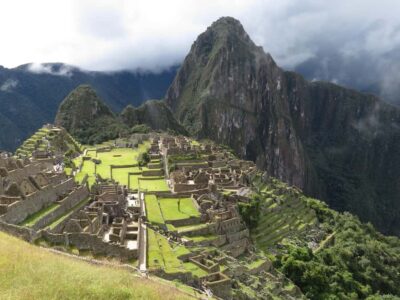
This Cusco half-day four ruins tour packages big names of Inca architecture into a tight route, with a small group (max 15) and a guide who explains what you’re seeing as you go. You’ll move from a fortress-like complex above Cusco to a carved stone temple, then to a red fort and a spring-fed ceremonial site.
I love the way the stops feel different from each other. At Sacsayhuaman, the zigzag walls and giant stone blocks make the scale obvious fast. At the other sites—especially Q’enqo—you get the kind of details that turn ruins into stories: canals, carved chambers, and ritual spaces with meanings that still aren’t 100% nailed down.
One thing to watch: the day can feel a bit tight. The tour is listed as about 6 hours, but timing can shift, so if you like lingering and taking your time at each ruin, plan for a faster pace than you’d have on a private tour.
In This Review
- Key things to know before you go
- A Small-Group Four Ruins Route: What You’re Actually Signing Up For
- Where Pickup Happens and Why Timing Can Matter
- Stop 1: Sacsayhuaman’s Zigzag Walls and Sacred Views Above Cusco
- Stop 2: Q’enqo’s Monolith Temple, Crooked Canal, and Ritual Mystery
- Stop 3: Puka Pukara, the Red Fort, and the Inca Water Story
- Stop 4: Tambomachay and the Bath of the Inca Spring System
- Price and Tickets: The Real Value Behind the $45
- Altitude and Walking: How to Survive the Short Climbs
- The Guide Experience: When English and Spanish Explanations Land
- Who This Tour Fits Best (and Who Might Want Something Else)
- Should You Book the Cusco Half Day City Tour: Four Ruins?
- FAQ
- How long is the Cusco Half Day City Tour: Four Ruins?
- What time does the tour start?
- Where does the tour meet?
- How many people are in the group?
- What’s included in the price?
- Are entrance fees included?
- What ruins are included in the tour?
- Is there a lot of walking?
- How far in advance do people book this tour?
- What is the cancellation policy?
- Is this tour good for families?
Key things to know before you go
- Small-group max 15 keeps the ruins calmer and the guide’s attention easier to get
- Bilingual English/Spanish guidance helps you follow the history clearly
- Four very different sites: fortress, carved temple, red fort, and a spring-fed terrace complex
- Entrance fees aren’t included (site entry listed at PEN 70 per person)
- Altitude + stairs can make the short walks feel harder than you expect
- You may get extra stops like an alpaca wool shop, depending on the day
A Small-Group Four Ruins Route: What You’re Actually Signing Up For
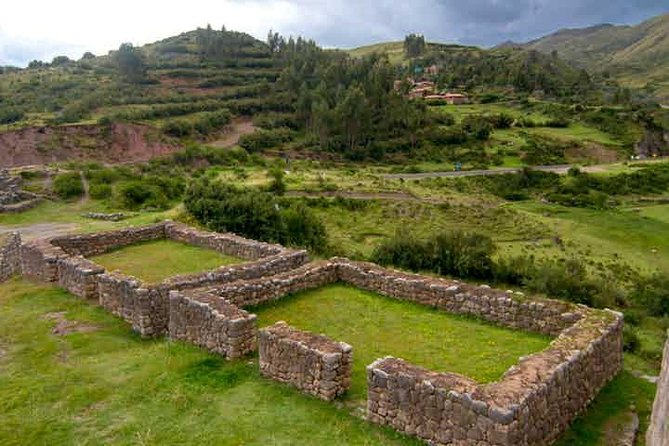
This is a straightforward “great hits” outing around Cusco. You’re not trying to do everything; you’re hitting the most meaningful nearby Inca sites in a half-day window with transport included and a bilingual guide (English & Spanish).
The value here is the order. You start high on the ridge at Sacsayhuaman, which gives you context for Cusco’s Inca planning—defensive, ceremonial, and designed to dominate the view. Then you work your way into Q’enqo and Puka Pukara, where the focus shifts toward ritual space and water management. Finally, Tambomachay slows the pace with terraces built over a natural spring.
Group size matters more than people think. Max 15 means you’re less likely to be swallowed by a crowd, and your guide can stop, regroup, and explain without everyone getting lost. If you want the vibe of a calm guided walk (not a chaotic bus tour), this format fits.
You can also read our reviews of more city tours in Cusco
Where Pickup Happens and Why Timing Can Matter
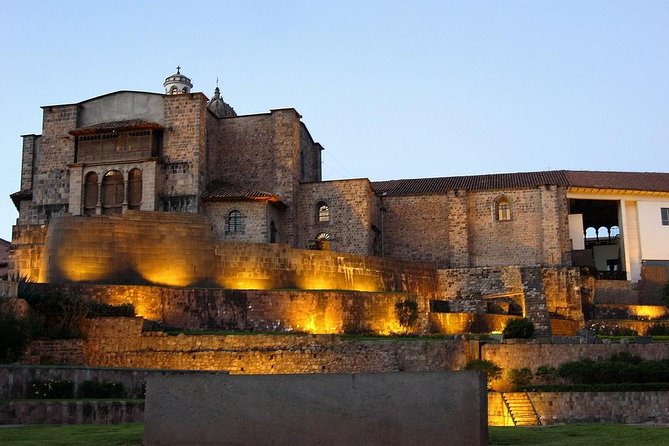
The tour meets at HEIDI TRAVEL EIRLC. Plateros 324, Cusco 08000, Peru. It starts at 10:00 am and ends back at the meeting point.
A practical tip: build a little buffer into your morning. One outing noted pickup running about 35 minutes late, and another mentioned some confusion at the start of the day. None of this means things will go wrong for you, but it’s a reason to show up early and keep your plans flexible.
Also, the sites are spread over a short area, so you’ll do plenty of “grab-and-go.” The van rides are usually quick, but seat space can be tight when the group fills up. If you’re sensitive to cramped rides, consider bringing a water bottle and getting comfortable with short transitions.
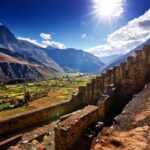
Stop 1: Sacsayhuaman’s Zigzag Walls and Sacred Views Above Cusco
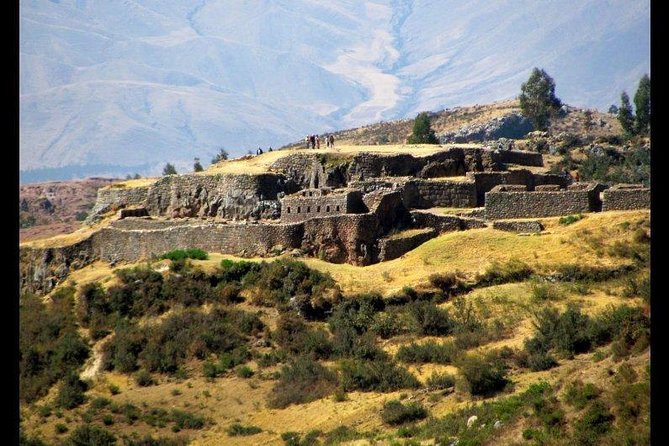
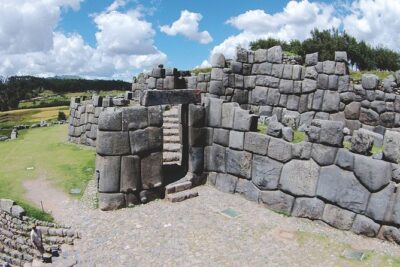
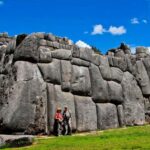
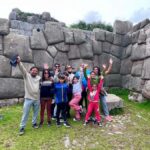
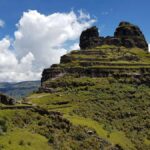
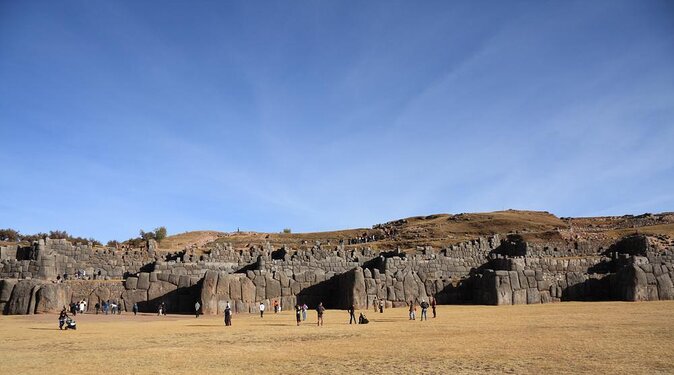
Sacsayhuaman is the first big wow. It’s commonly described as a fortress—the Spaniards reportedly used that label when they arrived in the 1500s. But it’s also tied to the idea of a ceremonial center, which is exactly why it’s interesting: the architecture blends military-style massing with sacred planning.
Here’s what to look for. The main wall uses a zigzag design, built with giant stones—up to 5 meters high and 2.5 meters wide, weighing an estimated 90 to 125 tons each. That sounds like bragging, but once you’re there you’ll understand why people still argue about how they moved and placed blocks this large.
The name itself has meaning in Quechua: Sacsayhuaman translates roughly to place where the hawk is satiated. Whether you track the story or not, the ridge position gives you the point. From here, you can see peaks that the Incas considered sacred, including Ausangate, Pachatusán, and Cinca.
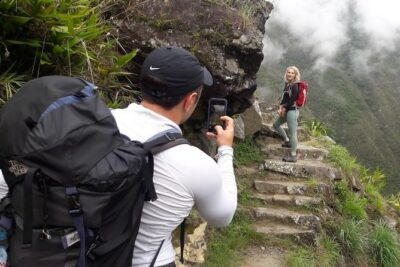
Practical note: you’ll likely walk and climb some uneven ground and stairs. It’s not described as extreme, but Cusco altitude can turn “easy” into “slow and steady.” If you pace yourself, the views are well worth it.
Stop 2: Q’enqo’s Monolith Temple, Crooked Canal, and Ritual Mystery
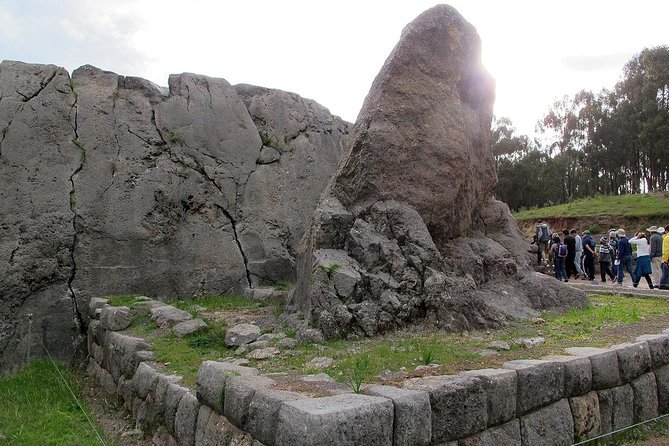
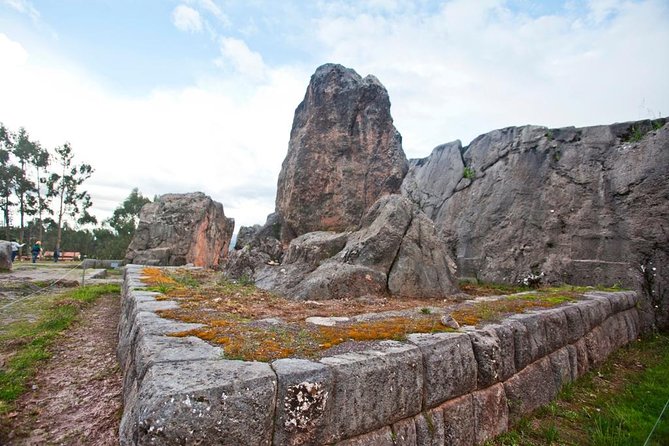
Q’enqo (also written Qenqo) is the stop that turns your “photos only” trip into a thinking trip. In Quechua, Qenqo means labyrinth or zig-zag, and the most famous feature is the crooked canal cut into rock.
The problem is purpose. The Incas built the temple, then the Spanish period changed everything, leaving big gaps in what people did there. Researchers guess at what the canal carried—ideas include holy water, chicha (corn beer), or blood—and many theories connect it to death rituals and how leaders or individuals were evaluated in life.
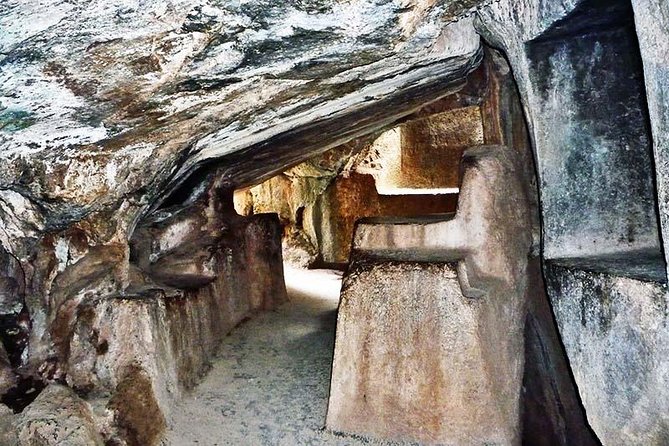
You don’t need to “solve” the mystery to enjoy it. Look at the craftsmanship: Q’enqo is carved out of a single massive monolith, combining man-made tunnels with natural chambers. One chamber has 19 small niches and is set up like an amphitheater. Even if you can’t confirm the exact ceremony, that design signals intention—this wasn’t random rock carving.
The guide part is key here. A good explanation helps you connect the architecture to why the Incas would build a ritual space with liquid channels and dedicated niches.
Expect another hour-ish at the site. Keep water handy and watch your breathing as you move between levels.
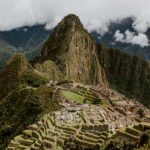
Stop 3: Puka Pukara, the Red Fort, and the Inca Water Story
Puka Pukara means red fort, tied to the color of the earth at the site. This stop gives you a different kind of Inca engineering than you saw at Sacsayhuaman.
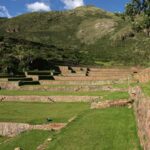
What stands out first is the layout: enclosures with inner squares, canals, aqueducts, baths, and a well-known ancient road connected to the broader Inca road system called Qhapaq Ñan. You’ll notice the rocks are arranged with an uneven surface compared to some other archaeological sites, so the overall look feels more rugged and functional than perfectly uniform.
Then there’s the structure of the walls and levels. It’s described as having three walls placed on different levels. One of the notable details is a sinuous path that avoids cutting through protruding rocks—again, design that looks practical, not just decorative.
Some of the stories around Puka Pukara are rumors or chronicler claims rather than proven facts. There’s mention of a possible chincana (tunnel) linking Puka Pukara with Tambomachay, and in pre-Hispanic times it may have served as a kind of barracks/tambo (hostel) for an entourage that was connected to visits to baths at Tambomachay.
Whether you treat those stories as fact or folklore, the real takeaway is the theme: Incas didn’t separate “ritual” and “infrastructure.” Water systems, roads, and built spaces were all part of how people lived, traveled, and honored sacred routines.
Stop 4: Tambomachay and the Bath of the Inca Spring System
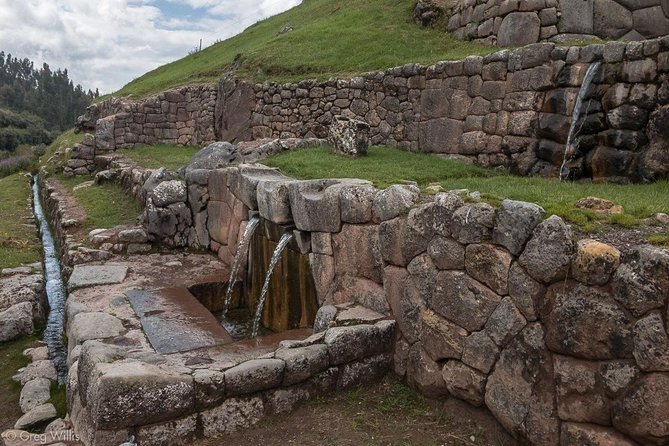
Tambomachay often feels like a palate cleanser after Sacsayhuaman and Q’enqo. It sits just outside Cusco on a hill about 4 miles north, at roughly 12,150 feet (3,700 meters).
This site is known as El Baño del Inca, or the Bath of the Inca, but the big idea isn’t only bathing. The function is debated—ceremonial site, Inca spa, military outpost, or a mix of all three.
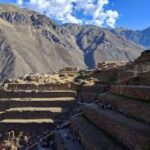
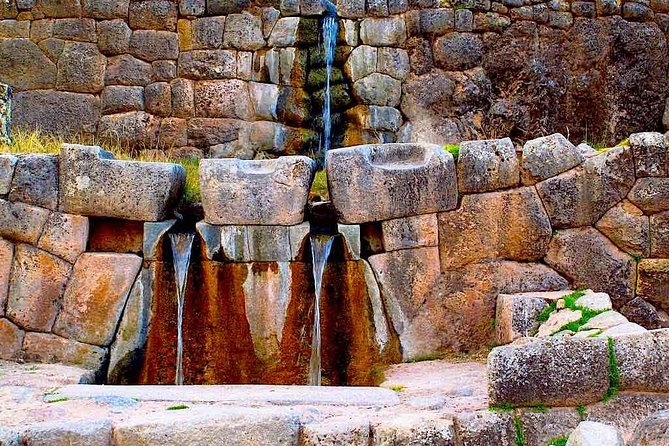
What you can see is the engineering. Tambomachay has three stepped terraces built with precise Inca stonework. Trapezoidal niches are built into some retaining walls, and the entire complex is built over or into a natural spring. That spring continuously feeds small aqueducts, canals, and waterfalls that run through the terraces.
When you’re there, the flowing water changes the feel of the place. It turns the site into something closer to a living system than a museum ruin. And because Tambomachay is described as more secluded and tranquil, it’s often easier to slow down and take in the sound and the layout.
Plan on about 45 minutes here. If the altitude is hitting you hard, this is the site where you’ll benefit most from standing still for a moment and letting your breathing recover.
Price and Tickets: The Real Value Behind the $45
The tour price is $45.00 per person for about 6 hours on paper. What you’re paying for is more than walking through ruins. You get transport plus a bilingual guide, which is the difference between seeing “cool rocks” and understanding what you’re looking at.
Your extra cost is entrances. The tour lists that entrance to sites is PEN 70 per person, and it also lists Qorikancha entrance at PEN 20 per person. Qorikancha isn’t in the four-stop route, so treat that as something you should confirm if it matters for your exact departure.
How to think about it: the guide and transport are included, so the “shell cost” is already doing work for you. Once you add entrance fees, you’re still usually paying a fair amount for the convenience of a small-group guided loop, especially if you’d otherwise need separate transport and more planning to reach all four sites efficiently.
If you’re visiting Cusco for a short stay, this route is often the kind of value that’s hard to replicate on your own without losing time.
Altitude and Walking: How to Survive the Short Climbs
Cusco altitude is real, and this tour hits several sites at elevation. One review specifically noted walking up to the sites wasn’t hard for them, but altitude still left people breathless. That’s a pretty normal pattern here.
My advice is simple:
- Move slowly on stairs and uneven ground.
- Take breaks when your guide pauses for explanations.
- Bring a layer. Mornings can feel cool even when the sun is bright.
Also watch the pace. Some outings are timed tightly, which can make the climbs feel like a race. The guide’s style matters: the best ones won’t push you past your comfort level. If you need to stop more often, speak up early so the guide can adapt.
This isn’t a “no-walking” tour. If stairs or steep uneven ground is a dealbreaker for you, consider another format—maybe a more restricted route or a private guide.
The Guide Experience: When English and Spanish Explanations Land
The guide quality is one of the top reasons people rate this tour highly. You’re getting a bilingual English & Spanish guide, and that matters in a place where the details are complex.
Two guide names showed up in experiences shared from the tour operator’s outings: Edith and Freddy. Edith was described as very knowledgeable and considerate, with clear bilingual communication. Freddy was also described as the highlight in one account, especially for English communication when the initial start felt confusing.
What to look for in a good guide on these ruins:
- They point out the structural details, like zigzag walls at Sacsayhuaman or the niches at Q’enqo.
- They explain the uncertainty where history isn’t fully proven, like Q’enqo’s canal purpose.
- They keep the group together so you don’t spend your “tour time” searching for the next stop.
If you’re the type who likes to understand how and why a site was built, this tour plays to that strength.
Who This Tour Fits Best (and Who Might Want Something Else)
This tour is a good match if you want:
- A short, structured way to see multiple Inca sites around Cusco
- A small-group experience rather than a crowded bus parade
- A guide who translates architecture and meaning into plain explanations
It also suits solo travelers, couples, and families. One family-focused experience called it a fun learning outing that worked well for starting a vacation.
If you’re someone who needs lots of time at each ruin to soak it all in, you may feel the pace. One note described the tour as slightly rushed and shorter than expected. That’s the tradeoff for packing four stops into a half-day loop.
Should You Book the Cusco Half Day City Tour: Four Ruins?
Book it if you want an efficient Cusco plan with transport, a bilingual guide, and a small-group feel. It’s especially worth it if this is your first visit and you want the major Inca sites without spending hours figuring out timing and logistics.
Skip or switch to something else if you hate tight schedules, want a slow wandering pace at each site, or struggle with stairs and uneven paths at altitude.
If you do book, go in with the right mindset: treat it like a guided sampler. By the end, you’ll have a clear mental map of Cusco’s Inca world—fortress views, ritual canals, red-fort planning, and spring-fed terraces—all in one compact morning.
FAQ
How long is the Cusco Half Day City Tour: Four Ruins?
It’s listed as approximately 6 hours.
What time does the tour start?
The start time is 10:00 am.
Where does the tour meet?
You meet at HEIDI TRAVEL EIRLC. Plateros 324, Cusco 08000, Peru.
How many people are in the group?
The tour has a maximum of 15 travelers.
What’s included in the price?
Transport is included, along with a bilingual guide (English & Spanish).
Are entrance fees included?
No. Entrance to sites is not included (listed at PEN 70 per person). Qorikancha entrance is also listed separately at PEN 20 per person.
What ruins are included in the tour?
Sacsayhuaman, Q’enqo, Puka Pukara, and Tambomachay.
Is there a lot of walking?
There is walking up to the sites. Most travelers can participate, but altitude can make it feel harder.
How far in advance do people book this tour?
On average, it’s booked about 18 days in advance.
What is the cancellation policy?
Free cancellation is available up to 24 hours in advance for a full refund.
Is this tour good for families?
Based on available experiences, it can work well for families, though there is walking and stairs involved.