REVIEW · SACRED VALLEY TOURS
Cusco: Tandem Paragliding in The Sacred Valley of The Incas
Book on GetYourGuide →Operated by Flying expedition · Bookable on GetYourGuide
A day in Cusco that doesn’t end with another museum. Tandem paragliding over the Sacred Valley is one of the most visual ways to meet Peru’s Andes—up close, moving fast, and safely guided. I like that you’re not learning gear or technique yourself; you just focus on the view while an instructor handles the wing and the timing. I also like that you get a video from your flight, so the magic survives the next morning back in Cusco. One drawback: the day can run longer than you expect if conditions aren’t right, and in some cases they may even switch mountains.
You’ll get picked up from the Historic Center or the Sacred Valley (based on your option), then head toward the launch area near Cerro Sacro. The best part is watching the Sacred Valley “come alive” below you—fields, settlements, and distant glacial peaks—while your pilot waits for the right winds to make the ride smooth.
In This Review
- Key Points Before You Go
- Flying From Cerro Sacro: Why This Launch Makes the Sacred Valley Feel Huge
- Getting Picked Up in Cusco or the Sacred Valley (and Why That Matters)
- The Safety Briefing and Harness-Up: Less Scary Than You Think
- The Flight Over the Sacred Valley: What You’ll Actually See
- Video From Your Flight: The Best Souvenir That Doesn’t Collect Dust
- When Weather Changes Everything: Waiting, Switching Mountains, and Staying Calm
- Price and Value: Is $120 Worth It in the Cusco Context?
- Who This Tandem Paragliding Trip Fits (and Who Should Skip It)
- Language, Group Size, and the Friendly Part of Being First-Timer
- Should You Book Cusco Tandem Paragliding in the Sacred Valley?
- FAQ
- How long is the paragliding experience in total?
- How long is the actual flight?
- Where do you fly from?
- Is hotel pickup included?
- What’s included with the flight besides the instructor?
- What language will the instructor speak?
- Is food included?
- What should I bring?
- Are there any weight or age limits?
- What happens if the weather is unsafe?
Key Points Before You Go
- Cerro Sacro launch point sits high (3,880 m / 12,730 ft), which helps deliver big views over the valley
- Small group size (up to 6 participants) means you’re not lost in a crowd
- Instructor-led tandem flight: you’re strapped in, briefed up, and guided end to end
- Flight time can stretch (around 10–15 minutes, sometimes longer with wind and thermals)
- You get a flight video for instant sharing back home
- Weather can change plans: waiting is possible, and safety comes first
Flying From Cerro Sacro: Why This Launch Makes the Sacred Valley Feel Huge
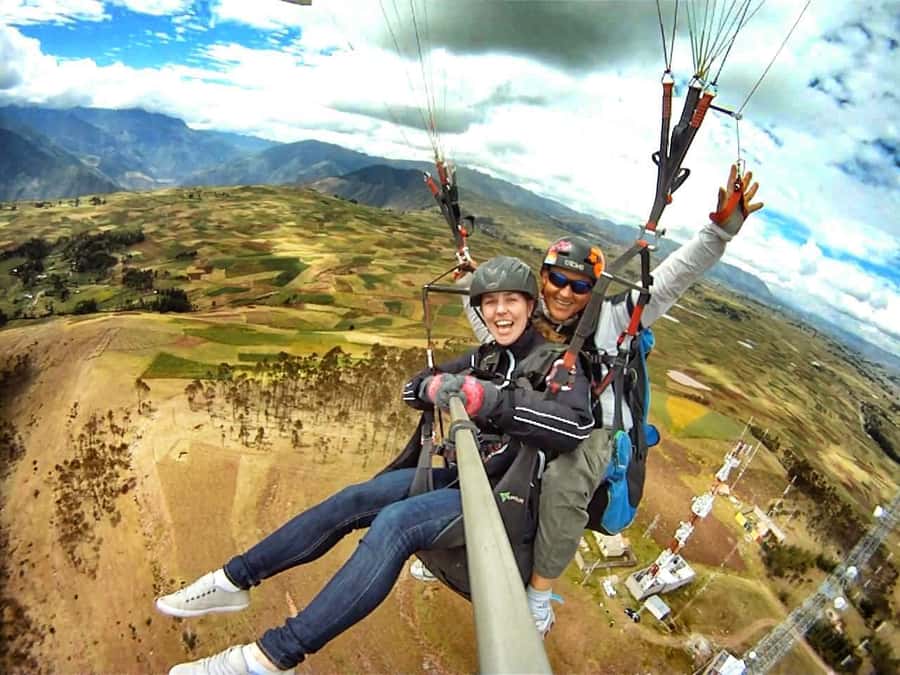
Cerro Sacro is the launch name you’ll hear again and again, and for good reason. You’re flying from a mountain around 3,880 meters (12,730 feet), with steep slopes and a big vertical drop—so even a short flight packs a “wow” quotient.
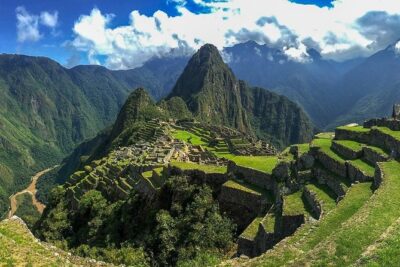
From up there, the Sacred Valley stops looking like a map and starts looking like geography. You’ll see patchwork farmland, darker green hillsides, winding textures of settlement life, and distant peaks that make Cusco’s altitude feel real. One of the best parts of this trip is that it’s designed around flying conditions, not just checking a box. Many pilots aim to catch the kind of wind and lift that can turn a basic run into a longer, more playful glide.
Also, Cerro Sacro is described as one of the safer mountains in its local topography. That matters for tandem paragliding because the goal isn’t thrills for thrills’ sake—it’s a confident first flight.
You can also read our reviews of more tours and experiences in Cusco.
Getting Picked Up in Cusco or the Sacred Valley (and Why That Matters)
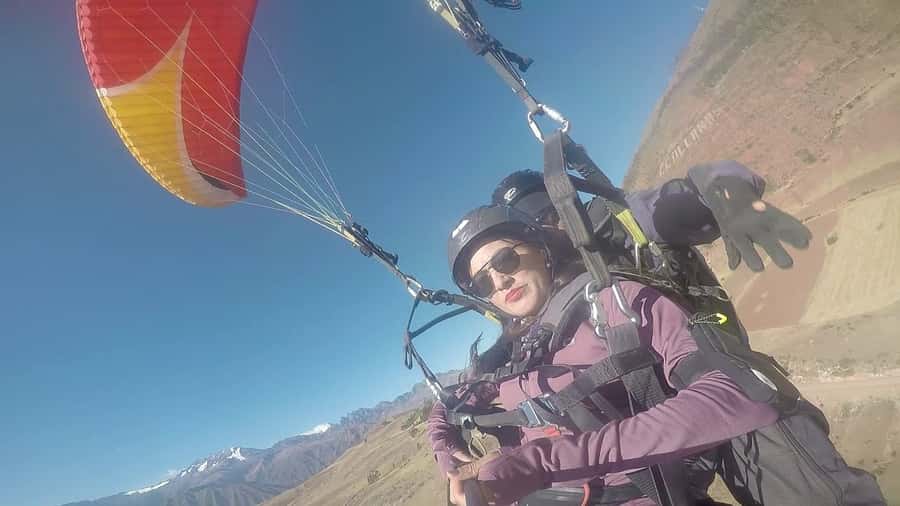
Your day usually starts with hotel pickup from either Cusco’s Historic Center or from Sacred Valley hotels. If you’re staying in areas like Ollantaytambo, Yucay, or Urubamba, pickup is included, but there’s a very practical note: narrow streets can limit vehicle access. If that happens, you’ll meet the team at the closest accessible point.
This isn’t just logistics trivia. It affects how smoothly your morning goes. Cusco traffic and tight streets can turn a “short drive” into a time sink if you assume you’ll be dropped right at the door. By planning for a possible meeting point, you keep your nerves steady—especially if you’re doing this for the first time.
The timing rhythm is also important. Paragliding is weather-led. So even if the overall duration is listed as 6–7 hours, your pilot may build in waiting time to get the safest, most enjoyable takeoff window.
The Safety Briefing and Harness-Up: Less Scary Than You Think
Before you fly, you’ll gather at the launch area with the whole team. You’ll get a briefing covering safety recommendations and how the takeoff works. Then your instructor will fit you with the harness and helmet and go over what to do during the flight and landing.
This is where good tandem operations win. You’re not guessing. You’re not figuring out the gear with sweaty hands and fear brain. You’re listening, then connecting into the system your pilot already understands.
In the real-world experience of this operator, pilots like Leo and Simon (and sometimes Carlos as a flight partner) are frequently praised for putting nerves at ease and explaining things clearly. That doesn’t mean you’ll never feel butterflies. It means you’ll know what’s happening instead of guessing.
One thing I think most first-timers underestimate: the physical feel. Even though you’re flying, you can still experience rollercoaster-like movement when the wing catches lift and the ride adjusts. That’s normal. It’s also why you want your pilot calm and in control—because you’re along for the adjustments.
The Flight Over the Sacred Valley: What You’ll Actually See
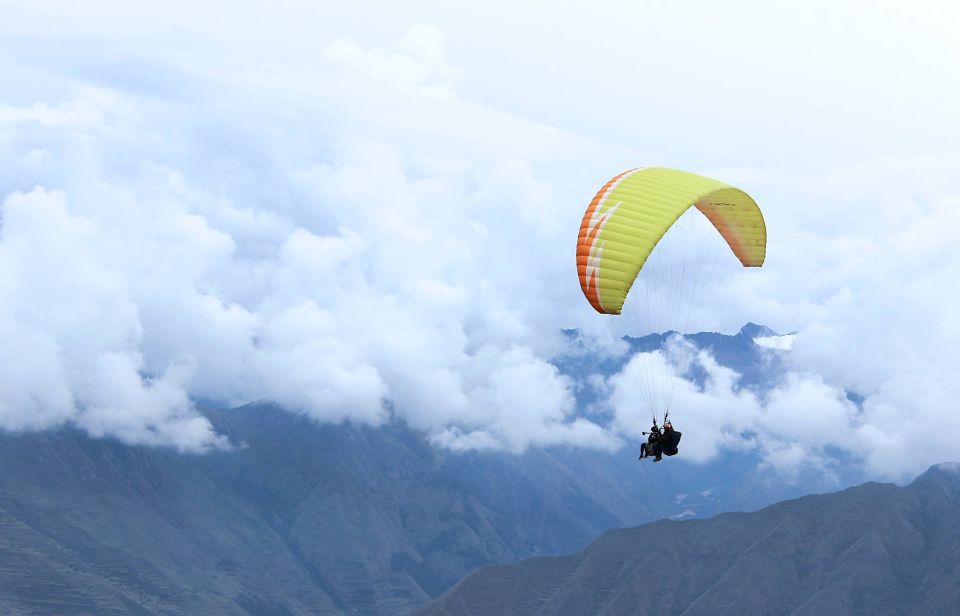
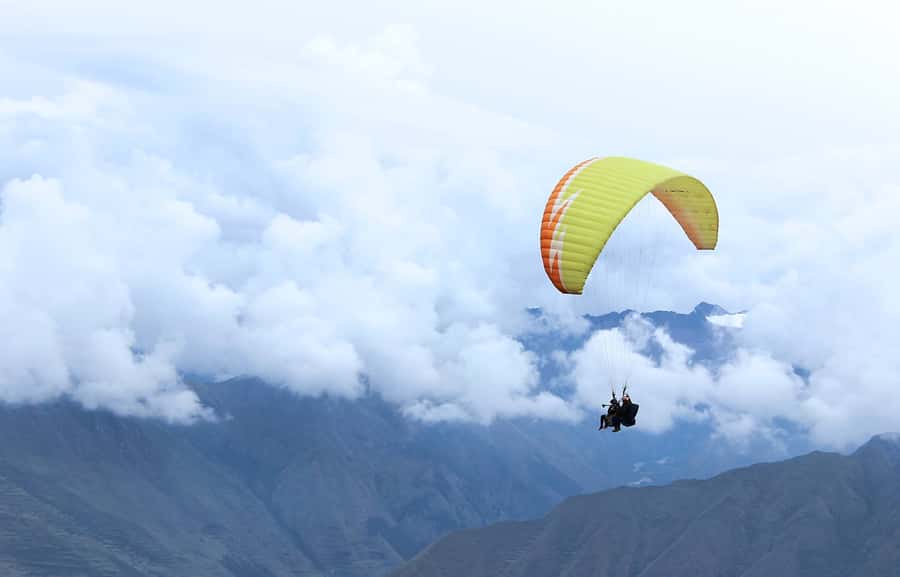
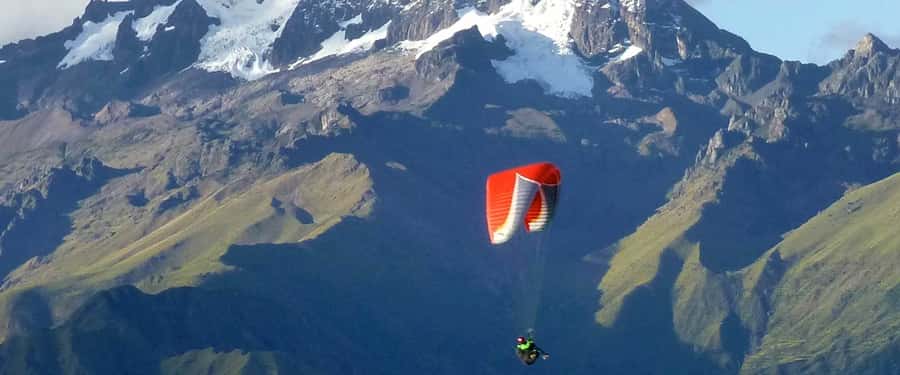
The flight itself is short by design—typically around 10–20 minutes—because conditions change quickly at altitude and pilots want the best balance of safety and scenery. You’ll take off from Cerro Sacro, then glide above the Sacred Valley.
What you’ll notice first is how fast the ground “re-reads” itself. Textures become patterns. Roads and fields become geometry. Settlements look smaller, but more purposeful. And the distant mountain shapes feel closer than you expect, because you’re no longer trapped at viewpoint height—you’re now traveling through the air between the valley and the sky.
People often mention the scenery mix that makes this area special: forested hillsides, small settlements, and Inca-era context visible in the way the valley is shaped and used. You may even spot birds of prey during the flight—guests have mentioned mountain caracaras soaring around the action.
You should also expect a landing that feels more “controlled spiral” than “soft bedtime.” One guest described an exciting ending with a soft touchdown while landing on the lower body (the reality of harness landings). It’s dramatic, but not random. Your pilot manages the approach and timing.
Video From Your Flight: The Best Souvenir That Doesn’t Collect Dust
You’ll receive a video captured during your flight. That matters more than you’d think. Photos are fine. Video helps you share the motion—the moments when thermals lift you a bit higher, the small turns, and the shift from valley view to peak horizon.
It’s also a useful memory tool for people traveling with family who couldn’t come. If you’re sharing the day with parents or friends back home, video gives them the full experience, not just the postcard angle.
Some guests specifically call out that the footage feels like a GoPro-style capture—steady, clear, and easy to watch later. Bottom line: you’re paying for a once-in-a-lifetime aerial view, and you’re not stuck trying to remember it through blurry screenshots.


When Weather Changes Everything: Waiting, Switching Mountains, and Staying Calm
Paragliding is one of those travel activities where the weather isn’t a minor detail—it’s the main character. If conditions become unstable (high winds, turbulence, rain), the pilot has the authority to wait or cancel the flight to keep you safe.
You’ll be notified if that happens. And here’s the practical consideration: if a flight is canceled, passengers still have to pay transport costs in that case. That’s why it’s smart to avoid scheduling this on the one day you must be absolutely elsewhere at a fixed time.
The day may also include waiting for the right conditions to take off. That’s not failure. It’s how pilots protect both comfort and safety. In the nicest scenarios, waiting pays off: calm periods can turn into a smoother launch, or pilots can time lift-catching so the ride feels longer and more exciting.
If Cerro Sacro isn’t flying-worthy that day, they may take you to another mountain. That reduces the chance you lose the day entirely.
Price and Value: Is $120 Worth It in the Cusco Context?
At about $120 per person, this isn’t a bargain activity. It’s also not overpriced for what’s included.
Here’s what you’re really buying:
- A professional instructor and licensed safety equipment (harness + helmet)
- Pickup and drop-off from the Historic Center or the Sacred Valley areas
- A flight that lasts roughly 10–15 minutes (sometimes longer depending on wind)
- A video from your flight
- Safety instructions and guidance before takeoff
When you break it down, you’re paying for specialized labor, real safety systems, and aerial experience you can’t replicate on your own with random street viewpoints. In a place like Cusco, where many half-day excursions cost similar amounts once you include guides and transport, this feels like fair value—especially because you come back with footage you can actually share.
If you’re deciding between this and a more ground-based Sacred Valley day, pick this if you want one big “I’ll never forget that” memory. Pick something else if you’re not into altitude sensations or you hate waiting.
Who This Tandem Paragliding Trip Fits (and Who Should Skip It)
This activity is best for people who want a controlled, guided first flight and don’t need to “do it themselves.”
It’s not suitable for:
- People with mobility impairments
- People over 200 lbs (91 kg)
- People under 88 lbs (40 kg)
- Children must be over 40 kg (88 lbs) with a parent or guardian’s permission
That weight info matters. Tandem paragliding is built on calculations that keep lift and control predictable. If you’re near the edge of the limits, it’s worth clarifying early so you don’t lose money or time.
Also, dress for the mountain cold. Even when Cusco feels warm in the afternoon, the launch and waiting areas can be chilly at altitude. One guest warned to bring a heavy jacket, gloves too, and to treat it like a cold morning even if you start in sunshine.
Practical packing list:
- Hat
- Sunscreen
- Jacket
- Gloves
If you’re the type who usually “forgets gloves,” don’t. You’ll feel it once you’re standing around before takeoff.
Language, Group Size, and the Friendly Part of Being First-Timer
The instruction and flight experience comes in English and Spanish. That’s helpful because the safety briefing is the key moment when you want clear understanding.
It’s also a small-group setup, limited to 6 participants. That usually means less waiting while people figure out where to stand, and more time for your instructor to guide you through the key steps.
Names you might hear: Leo and Simon are frequently mentioned as instructors/pilots, with Carlos also appearing as a flight partner in some experiences. Some days you’ll coordinate with a driver—Saul and Renzo show up in accounts of the drive to the landing area. Having a consistent team can help you feel calmer before you strap in.
Should You Book Cusco Tandem Paragliding in the Sacred Valley?
Book it if you want a high-impact, low-effort way to see the Sacred Valley from above—guided by experienced pilots, in a small group, with a flight video you’ll actually watch again later.
Don’t book it (or at least think twice) if you:
- Get stressed by weather delays and waiting around
- Have mobility or weight-range concerns
- Hate cold mornings and don’t plan to dress for altitude
- Can’t absorb the possibility of a cancel and the added transport cost if the day is shut down
If you’re flexible, dress warm, and trust the pilot’s call on wind and safety, this is one of those Cusco adventures that makes the whole trip feel more alive—because the Andes aren’t just something you look at. They’re something you briefly fly through.
FAQ
How long is the paragliding experience in total?
The full experience runs about 6 to 7 hours, including pickup, travel to the launch area, waiting for the right conditions, and the flight.
How long is the actual flight?
The tandem paragliding flight lasts about 10 to 15 minutes, but it could be longer depending on wind conditions.
Where do you fly from?
The flight usually takes off from Cerro Sacro in the Sacred Valley of the Incas. If conditions aren’t suitable there, you may go to another mountain.
Is hotel pickup included?
Yes. Pickup is included from the Cusco Historic Center or from Sacred Valley hotels (depending on the option you select). Pickup is also noted for areas like Ollantaytambo, Yucay, and Urubamba.
What’s included with the flight besides the instructor?
You’ll get licensed safety equipment (harness and helmet), safety instructions, and a video from your flight.
What language will the instructor speak?
The instructor is listed as offering English and Spanish.
Is food included?
No. Food and drinks are not included.
What should I bring?
Bring a hat, sunscreen, a jacket, and gloves.
Are there any weight or age limits?
Yes. People over 200 lbs (91 kg) and people under 88 lbs (40 kg) can’t fly. Children must weigh over 40 kg (88 lbs) and need a parent or guardian’s permission.
What happens if the weather is unsafe?
If conditions become unstable (high winds, turbulence, rain, etc.), the pilot can wait or cancel for safety. Passengers are notified, and in the case of cancellation, passengers must pay transport costs.