REVIEW · CHINCHERO
From Cusco: Moray, Maras, and Salt Mines Half-Day Tour
Book on GetYourGuide →Operated by Sierra Travel · Bookable on GetYourGuide
Salt pools and Incan terraces in six hours. This Cusco-area half-day tour strings together Chinchero weaving with Salineras salt mines, plus the terraced farming wonders of Moray.
I like the Chinchero weaving workshop because you get to see artisans use natural plants to make the colors for their Andean textiles. I also like the Moray visit where the terraced layout and irrigation system are the main event, not just a quick photo stop.
One thing to factor in: this is tight timing, and you’ll also need to pay entrance tickets at Moray and the salt mines yourself (in soles) for full access.
In This Review
- Key things I’d mark on your map
- Why this Sacred Valley half-day works (even if you’re short on time)
- Getting going from Cusco: Plaza Regocijo to your first high-altitude stop
- Chinchero weaving workshop: where the color starts
- Moray terraces: farming engineering in a set of rings
- Maras village: preserved colonial stone buildings in an Andean setting
- Salineras salt mines: the 3,000-pool photo that’s also real work
- Price and value: $15 looks cheap, but factor in entry fees
- Timing realities: six hours means smart stops, not long hangs
- What to bring so the day stays comfortable
- Languages and guide: Spanish/English help where it counts
- Who should book this Moray, Maras, and Salt Mines tour
- Should you book it?
- FAQ
- What is the tour duration and where does it start?
- Is pickup from my hotel included?
- Are the Moray and salt mines entrance tickets included?
- How long do stops at Chinchero and Moray take?
- What languages are available for the tour guide?
- What altitudes are visited during the tour?
- What should I bring?
- Is the tour suitable for wheelchair users or mobility impairments?
- FAQ
- Can I cancel for a full refund?
- Is there a pay-later option?
Key things I’d mark on your map
- Chinchero weaving workshop with natural dye plants for Andean color
- Moray terraces and irrigation system you can actually understand with a guided stop
- Maras village for preserved colonial stone buildings and architecture
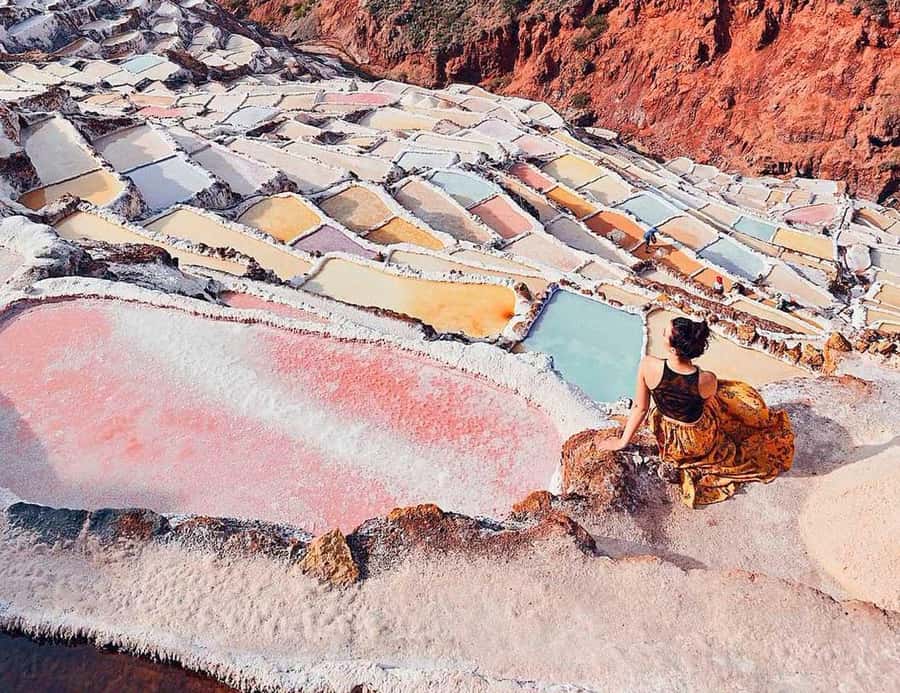
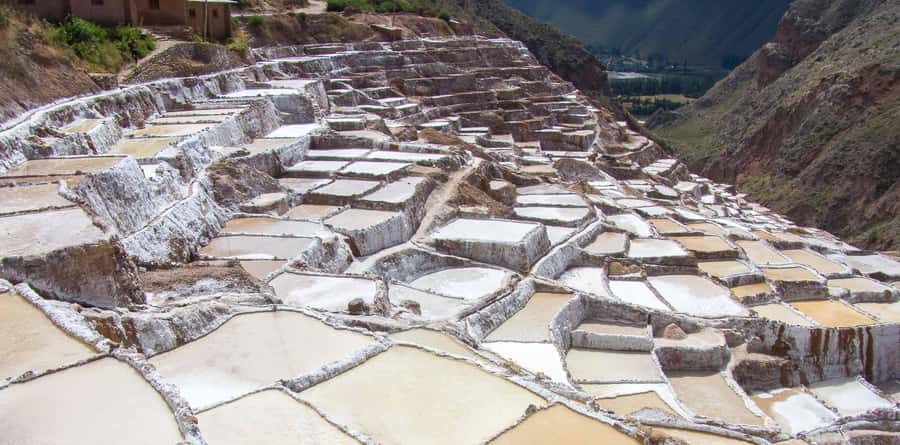
- Salineras salt mines with about 3,000 small pools still producing salt
- A fixed half-day route with van rides that keep the day moving
Why this Sacred Valley half-day works (even if you’re short on time)
The Sacred Valley can feel huge when you look at a map. This tour is smart because it gives you the core wow-stops without turning your day into a logistics puzzle.
You’ll move through four very different places: a working Andean community (Chinchero), an agricultural engineering site (Moray), a village with older stonework (Maras), then the almost surreal salt ponds at Salineras. If you want variety in six hours, this route does it.
Getting going from Cusco: Plaza Regocijo to your first high-altitude stop
The day starts at Plaza Regocijo in Cusco. You’ll head out by van, with about 50 minutes of driving to reach Chinchero.
Chinchero sits at 3,762 meters. Even if you’re already in Cusco acclimatizing, take it easy on the first walk and keep water handy. The tour is built as a highlights loop, so your feet will do some work, but it isn’t marathon pacing.
Chinchero weaving workshop: where the color starts
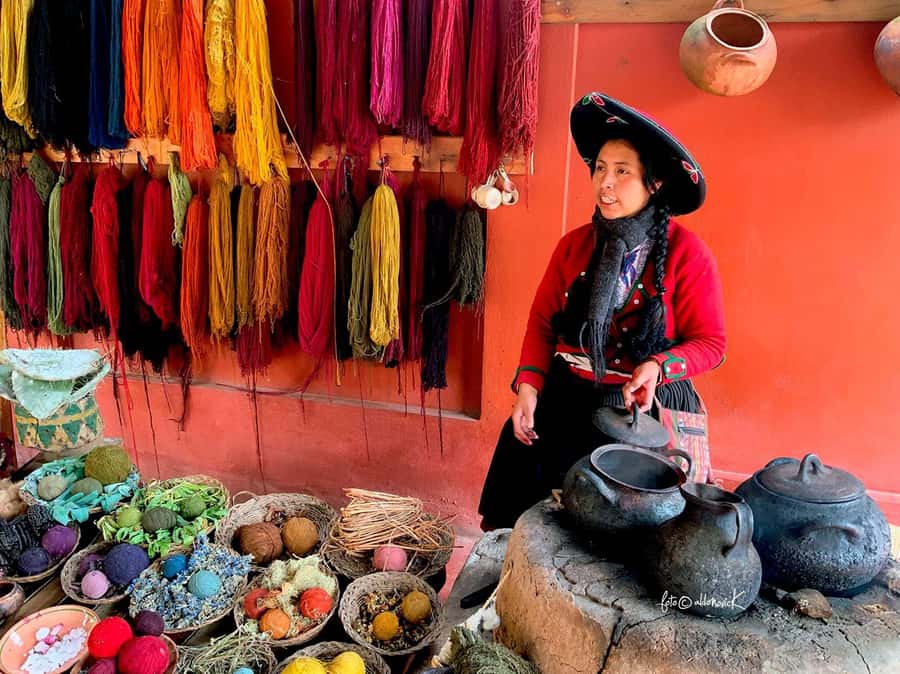
Chinchero is one of those places where you can feel the difference between seeing crafts and understanding them. You get a photo stop and shopping time (about 40 minutes), and the highlight is the weaving workshop visit.
In the workshop, artisans continue the Quechua tradition. The best practical detail is that they explain how they use natural plants to extract colors for Andean art. This is the kind of explanation that makes a purchase make sense later, because you’ll know what’s behind the hues.
What to watch for:
- Look at how materials turn into color, not just the finished textile.
- If you want gifts, Chinchero is your main shopping moment.
- Bring your camera, but don’t rush—this is the stop where you can actually learn something before the day moves on.
A small consideration: Chinchero includes shopping time, so if you prefer zero browsing, just keep your eyes on the workshop portion and treat shopping as optional.
Moray terraces: farming engineering in a set of rings
After Chinchero, it’s another van ride of about 50 minutes. You’ll arrive at Moray at 3,450 meters, and then you get both a photo stop and a guided tour (about 40 minutes).
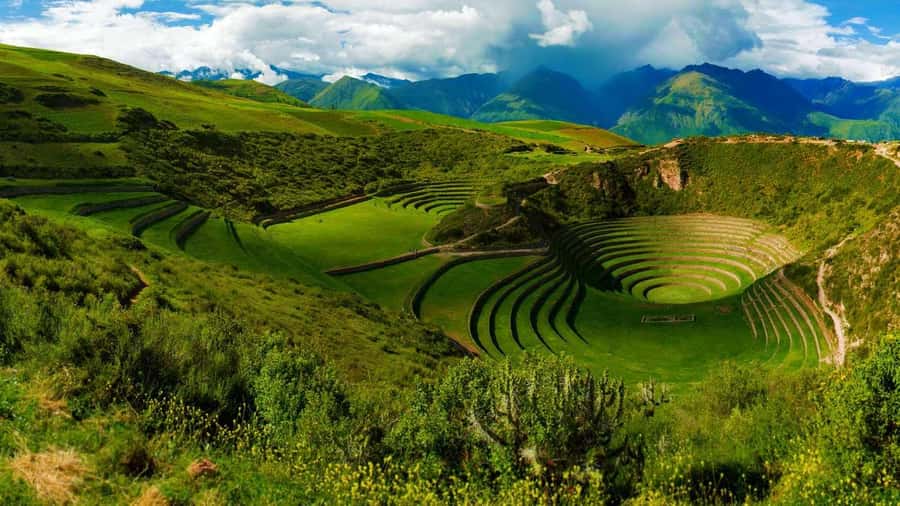
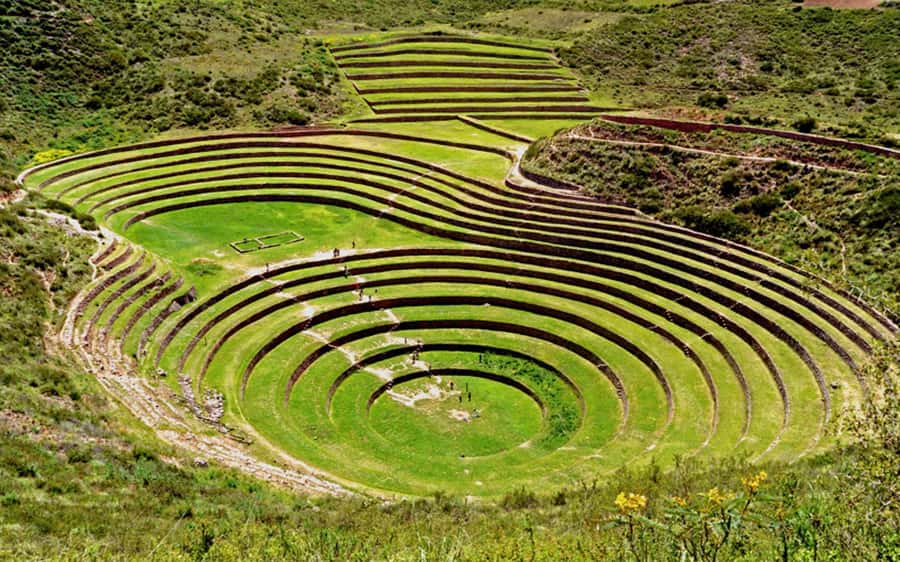
Moray is famous for its terraced, circular structures and the irrigation system tied to it. Even in a short visit, the guided element matters here. The terraces aren’t just pretty. They’re part of a designed system for agriculture, and the tour helps you connect what you’re seeing to how it worked.
Why Moray feels special (and not just scenic):
- You see a purposeful design: terraces stacked in a structured way.
- You can spot the logic of water control through the irrigation system.
- The setting helps you understand how people used the terrain on purpose.
Tip for your visit: wear shoes with good grip. Some areas can be uneven, and you’ll be hopping between viewing points within a limited timeframe.
Maras village: preserved colonial stone buildings in an Andean setting
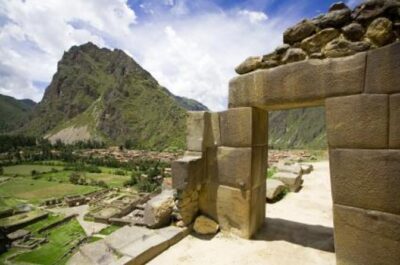
From Moray, you continue toward Maras. The tour focuses on the village’s preserved colonial architecture and fine stone buildings.
Maras gives you a different kind of contrast from Moray. Moray is about agricultural design. Maras is about built form—how stone and streets hold onto older influence while still living inside the Andean landscape of today.
This stop tends to be more about observation than technique. If you like architecture, it’s a pleasant break. If you’re only chasing the biggest scientific wow-factor, Maras can feel quieter, but it adds context to what you’ve already seen.
Salineras salt mines: the 3,000-pool photo that’s also real work
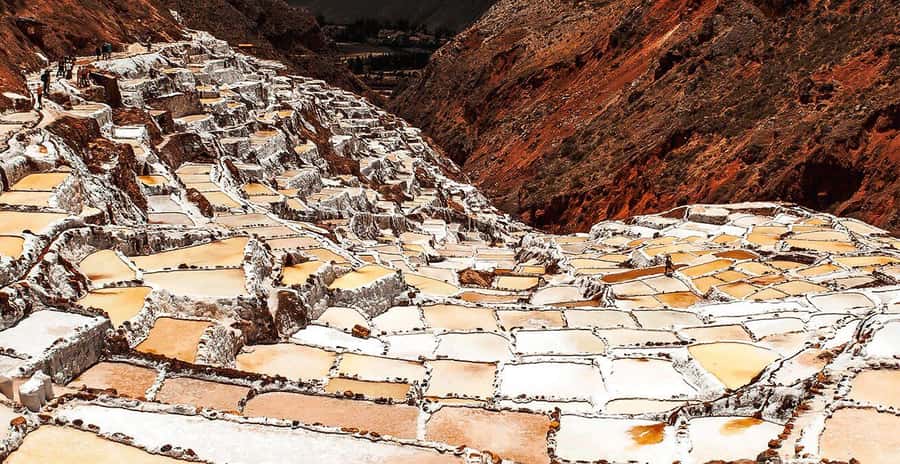
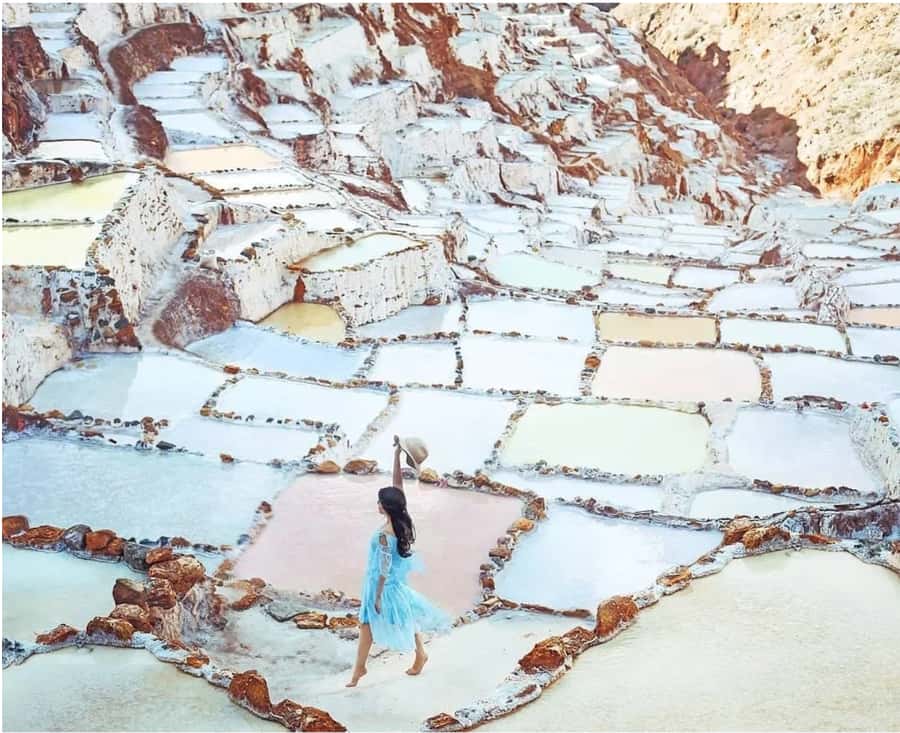
The final highlight is the Salineras salt mines, known for the extraordinary number of pools—about 3,000 small salt pans.
You’ll explore the site and learn how it works today. It’s described as a historic place dating back to pre-Incan times, and it still produces salt that gets processed and distributed in the region. That combination matters. It’s not just a relic display; it’s an active production landscape.
What you’ll likely notice right away:
- The mines look like a grid of tiny basins.
- The whole place has a working-salt feel, not a museum vibe.
- The sheer number of pools makes it hard to believe until you’re standing there.
Practical note: you’ll need the salt mines entrance ticket (listed as 20 soles) and it’s purchased in Maras. Plan on adding that to your day’s budget.
Price and value: $15 looks cheap, but factor in entry fees
The base price is $15 per person, and it includes the big time-savers: hotel pickup in Cusco, the Chinchero weaving workshop, the guided tour of Moray’s terraces, and exploration of the Salineras salt mines.
What’s not included is where you should do quick math:
- Moray entrance ticket: 70 soles (purchased on site)
- Salineras entrance ticket: 20 soles (purchased in Maras)
So you should expect an additional total of 90 soles in entrance fees, on top of the $15 tour price. If you pay those entries for a similar independent route, you’re paying for transport and a guide who helps you make sense of what you’re looking at. For many people, that’s the deal.
Also remember: this is a half-day plan. You’re getting the highlights, not a slow, all-day wander. If you love lingering, you may feel slightly rushed. If you want a smart sampler platter of the Sacred Valley, it’s solid value.
Timing realities: six hours means smart stops, not long hangs
The tour is listed as 6 hours. The schedule is built around short, efficient viewing blocks:
- Pickup and drive to Chinchero (about 50 minutes)
- Chinchero photo stop and shopping plus workshop time (about 40 minutes)
- Drive to Moray (about 50 minutes)
- Moray photo stop plus guided tour (about 40 minutes)
- Return to Cusco (with the final van portion listed as about 30 minutes)
One subtle benefit of this structure: it reduces decision fatigue. You show up, follow the guide, and hit the main points without having to map out routes between sites.
The downside is simple: you won’t have hours for the places. You’ll need to like “see it, understand it, move on.” That’s exactly what makes this a good half-day option.
What to bring so the day stays comfortable
You’ll want comfortable shoes, plus practical sun protection. The tour info also suggests:
- Sunscreen
- Water
- Camera
I’d add one more real-world tip: keep your pace easy at altitude. Chinchero and Moray are both above 3,400 meters, and you’ll be doing quick walks between viewpoints.
Rules-wise, smoking isn’t allowed, so plan accordingly.
Languages and guide: Spanish/English help where it counts
The tour includes a live tour guide in Spanish and English. That matters most at Moray, where the irrigation system and terraced layout need a bit of explanation to click.
Also, the stop at Chinchero is educational in a hands-on way. When you understand how colors come from natural plants, you’ll see textiles differently afterward.
Who should book this Moray, Maras, and Salt Mines tour
This tour fits you best if:
- You want a Sacred Valley highlights day without committing to a full day
- You’re curious about craft and how it connects to Andean tradition
- You like when engineering and agriculture get explained on the spot
It’s not a great match if:
- You need a wheelchair-friendly route. The tour is not suitable for people with mobility impairments or wheelchair users.
- You hate walking on uneven ground. Even with a short visit, you’ll move between viewing areas.
If you’re traveling with limited time from Cusco and want the big visuals—terraces, colonial stone, and the grid of salt pools—this is a practical choice.
Should you book it?
Yes, if you want a focused half-day that hits four classic Sacred Valley stops and includes guided context at Moray and the weaving workshop at Chinchero. The price is attractive, and the included guiding time helps you get more meaning out of the sites than a self-guided sprint.
Hold off or rethink if you’re looking for long, unhurried wandering. The schedule is efficient, and Moray and Salineras both come with extra entrance fees you’ll pay on the day. If you’re okay with that, you’ll likely enjoy the variety and leave with a strong mental picture of how salt, textiles, and terrace farming connect across the region.
FAQ
What is the tour duration and where does it start?
The tour runs for 6 hours and starts at Plaza Regocijo in Cusco. You return to Plaza Regocijo at the end.
Is pickup from my hotel included?
Yes. Pickup from your hotel in Cusco is included.
Are the Moray and salt mines entrance tickets included?
No. The Moray entrance ticket is listed as 70 soles and can be purchased on site. The salt mines entrance ticket is listed as 20 soles and can be purchased in Maras.
How long do stops at Chinchero and Moray take?
Chinchero includes a photo stop and shopping time for about 40 minutes. Moray includes a photo stop plus a guided tour for about 40 minutes.
What languages are available for the tour guide?
The tour guide is available in Spanish and English.
What altitudes are visited during the tour?
Chinchero is at about 3,762 meters, and Moray is at about 3,450 meters.
What should I bring?
Bring comfortable shoes, a camera, sunscreen, and water.
Is the tour suitable for wheelchair users or mobility impairments?
No. The tour is not suitable for people with mobility impairments or wheelchair users.
FAQ
Can I cancel for a full refund?
Yes. Free cancellation is available up to 24 hours in advance for a full refund.
Is there a pay-later option?
Yes. The tour offers reserve now & pay later, so you can book and pay nothing today.